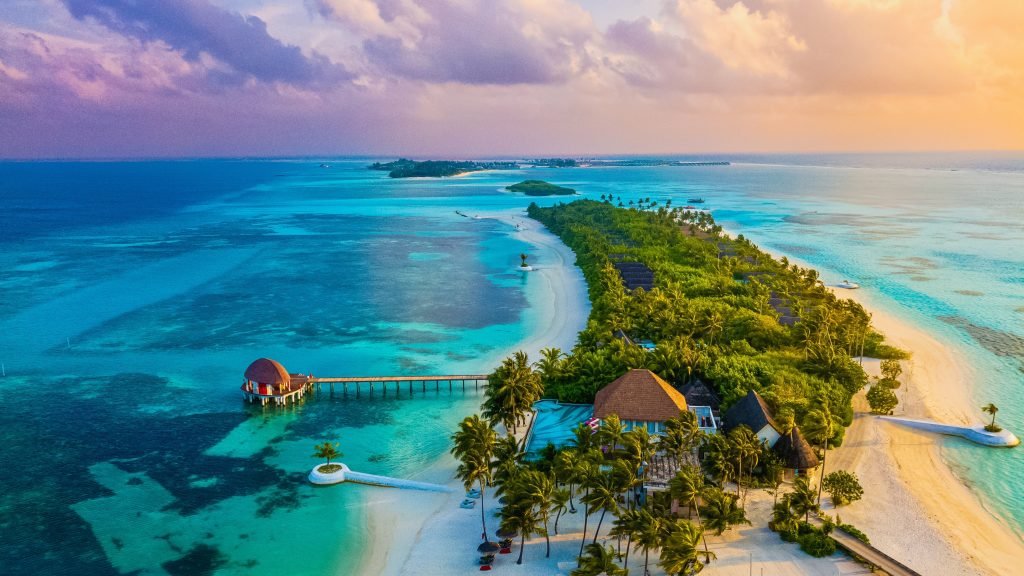

Somebody on the seaplane will have paid nearly twice what somebody else on the same seaplane paid, for the same villa, on an island where the weather that week will be functionally identical. That is not a scandal. It is just what happens in a destination with two seasons, one famous one and one that most people have been quietly warned off. The warning is mostly right. It is also mostly out of date.
The best time to visit the Maldives is between December and April, when the northeast monsoon delivers dry days, calm seas and the year’s best underwater visibility. It is also the most expensive window by a considerable margin. This guide covers the Maldives month by month, what each season actually costs once the taxes are added, and the weeks where the value gap is wider than the weather gap.
Most Maldives seasonal guides are written by companies selling Maldives holidays, and they describe the weather. Very few of them describe the price. We think the price is the more useful half of the answer, so this guide does both.
The short answer
For the most reliable weather: February and March. February is consistently the driest month of the year and the seas are at their calmest.
For the best balance of weather and value: late April and early May, or the second half of November. These are transition weeks. Rates soften before the weather does.
For diving, snorkelling and marine life: May to October, which is counterintuitive, because it is the wet season. It is also manta and whale shark season.
For the lowest rates: June to September, where the saving against peak season is substantial and the rainfall, while real, mostly arrives in short bursts rather than settled grey days.
Avoid if you can: the Christmas and New Year fortnight, unless the date is fixed. Rates peak, minimum stays apply, and compulsory gala dinners get added to the bill.
The two monsoons, explained properly
The Maldives sits just above the equator and the temperature barely moves all year. Daytime highs hold around 27 to 28 degrees Celsius in every single month, and the sea stays close to 28 degrees year-round. Nobody visits the Maldives at the wrong temperature.
What changes is wind, rain and sea state, and those are governed by two monsoons.
Iruvai, the northeast monsoon
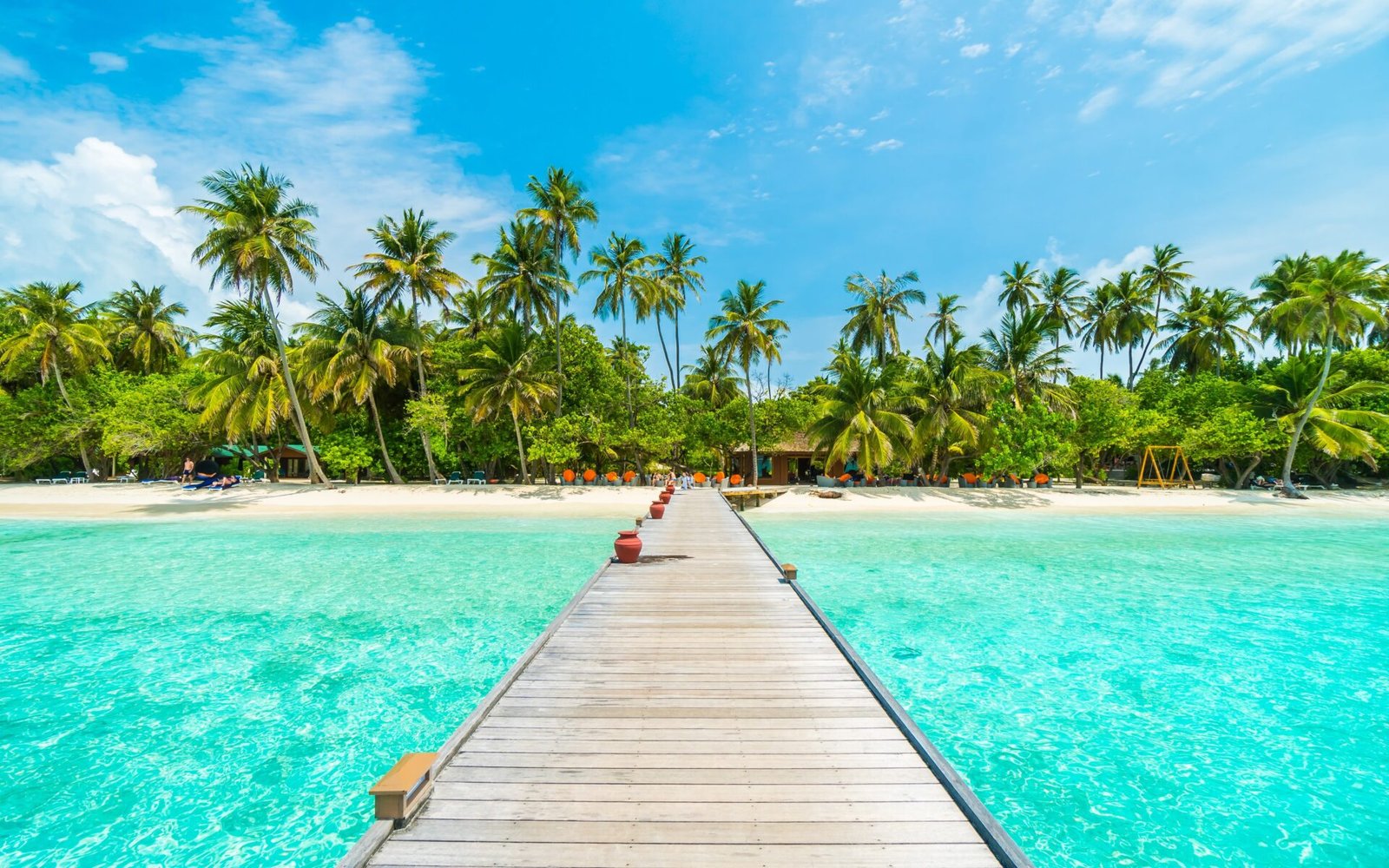
Roughly December to April. Dry, sunny, low humidity, calm lagoons and the year’s best underwater visibility. This is the season the brochures were photographed in, and it is priced accordingly.
Hulhangu, the southwest monsoon
Roughly May to November. Wetter, windier, more cloud, choppier water on the exposed side of each atoll. Rain typically arrives as heavy short bursts rather than all-day drizzle, and the sun usually returns the same afternoon. This is also when the plankton arrives, and with it the largest marine life in the archipelago.
One honest caveat before you plan around those dates. The monsoon transition has become less predictable in recent years, and local reporting has noted seasons starting earlier and ending later than the historic pattern suggests. Treat the months below as a strong guide rather than a guarantee, and check the Maldives Meteorological Service climate data closer to your dates.
Why your atoll changes the answer
This is the part almost every guide skips. The monsoon wind pushes plankton across each atoll and concentrates it on the downwind side, and the marine life follows it. In practice that means the western side of atolls in the dry season and the eastern side in the wet season.
The same logic applies to sea state. A resort on the exposed flank of an atoll during Hulhangu will have choppier water and more seaweed on the beach than a resort on the sheltered flank of the same atoll in the same week. When you are comparing two resorts at similar rates in the green season, orientation matters more than the star rating.
The Maldives month by month
January to March: peak conditions, peak rates
The core of the dry season. Long sunny days, minimal rain, glassy lagoons and the clearest water of the year for snorkelling. February is the driest month in the calendar by a wide margin and the single most reliable week-for-week bet in the Maldives.
The trade-off is straightforward. This is when the archipelago is fullest and dearest, and the best villa categories at the best resorts are committed months ahead. If you want a specific overwater villa at a specific resort in February, you are booking in the previous summer.
April: the best compromise month
April is the transition, and for a lot of travellers it is the sweet spot. The first half generally holds dry-season conditions. The second half starts to see building humidity and showers. Rates begin to ease before the weather meaningfully turns, which is the definition of good value.
If you want one recommendation from this entire guide, it is the second and third weeks of April.
May to July: the value window, and what you actually risk
May is often the wettest month on paper, and it is also the month the plankton bloom begins. Rainfall stays elevated through June and July.
What you are actually risking is not a washed-out holiday. It is a handful of afternoons interrupted, more cloud in your photographs, and choppier water for boat transfers. What you are buying is a rate reduction that can be substantial against February, on an island that looks exactly the same.
The contrarian view, and we will stand behind it: for a couple who want a beach, a pool and each other, the green season is underrated to the point of being mispriced. For a once-in-a-lifetime honeymoon where the photographs matter as much as the days, pay for February. The distinction is not about money. It is about what the trip is for.
August and September: manta and whale shark season
Rainfall remains high and sunshine hours dip to around seven a day. This is also the peak of the best wildlife experience in the country.
Hanifaru Bay sits in Baa Atoll, which was awarded UNESCO World Biosphere Reserve status in its entirety in 2011. PADI reports that more than 1,600 individual manta rays have been identified in the atoll, over 40 percent of the Maldivian population, and that feeding aggregations run from June to November. Other operators put the window slightly wider, from May to early October, with peak activity between July and October. Hundreds of mantas can gather in the bay at once, frequently joined by whale sharks. Snorkelling only, no diving, and visitor numbers are capped.
If marine life is the reason for the trip, this is your window and the rain is the price of admission.
October and November: the turn
The wet season winds down through these months. Rainfall stays high into November on most published averages, and the sea state settles progressively.
Late November is the second value window of the year, and it works the same way April does in reverse. Conditions improve before the rates do. It also runs right up against the festive surge, so the difference between the last week of November and the third week of December is enormous in price and modest in weather.
December: two completely different months in one
Early December belongs to the dry season and is one of the better weeks of the year. From roughly the third week, the festive period takes over and the Maldives becomes the most expensive it gets.
Expect minimum stay requirements of five to ten nights across Christmas and New Year, compulsory gala dinner supplements on 24 and 31 December, and rates that can run at multiples of the shoulder season. None of that is hidden, but it does not always appear in the headline nightly rate.
What each season actually costs
The taxes nobody quotes you
Three charges sit on top of the room rate in the Maldives and they compound.
Green Tax is charged per person per night. The Maldives Inland Revenue Authority confirms it rose to $12 per person per night at resorts on 1 January 2025, doubled from the previous rate. Children under two are exempt.
Tourism Goods and Services Tax is applied at 17 percent.
Service charge is typically 10 percent.
Two adults on a ten-night stay are therefore paying $240 in Green Tax alone before anything else is added, and the two percentage charges apply to the room and to everything you sign for on the island. On a Maldives holiday, where almost every meal and every excursion is charged to the room, this materially changes the total. Budget the headline rate plus roughly a third, then add transfers.
The seaplane, which is not optional
Transfers are the most commonly underestimated line on a Maldives bill. A return seaplane transfer for two can run into four figures, it is charged separately from the room in most cases, and seaplanes do not fly after dark, which means a late arrival into Male can force a paid overnight before you have seen your resort.
Resorts reachable by speedboat cost less to get to and give you back most of a day. Of the three Maldives resorts we have reviewed, Waldorf Astoria Ithaafushi is around thirty minutes by speedboat and The Ritz-Carlton Fari Islands around forty-five, while You & Me Maldives up in Raa Atoll is a forty-five minute seaplane. That distinction matters most between May and November, when weather delays are likeliest. If you are optimising for value in the green season, a speedboat resort in a nearby atoll saves more than trading down a villa category.
Timing it around what you came to do
Diving and snorkelling
For visibility, the dry season is unmatched. For sheer biomass, the wet season wins. Follow the plankton rule: west side of the atolls between December and April, east side between May and November, as ZuBlu sets out in detail. Ask a prospective resort which side of its atoll it sits on before you book a green-season trip built around diving.
Surfing
The southwest monsoon from April to October generates the consistent southern Indian Ocean swell that the Maldives is known for, with the North and South Malé atoll breaks at their best. November to March is smaller and lighter, which suits beginners, and the southern atolls still pick up swell.
Honeymoons
If the photographs matter, book the dry season and accept the price. If the privacy matters more than the light, the green season delivers emptier islands. Our guides to luxury hotels with private plunge pools and the best private island resorts cover the properties where seclusion is structural rather than marketing, and the honeymoon collection gathers the rest.
Where to stay, and how season changes the choice
We have reviewed three Maldives resorts in depth, and the transfer method matters as much as the villa in a green-season booking.
Waldorf Astoria Maldives Ithaafushi, which we scored 9.4, sits in South Male Atoll roughly thirty minutes from the airport by speedboat. That is the shortest transfer of the three and it removes the seaplane problem entirely. It is also the largest-scale property of the three, with the villa inventory and the restaurant count to absorb a wet afternoon without the island starting to feel small, which matters far more in August than in February. It sits within the wider Waldorf Astoria portfolio we have covered across sixteen properties.
The Ritz-Carlton Maldives, Fari Islands, scored 9.2, is in North Male Atoll and also speedboat-served, at around forty-five minutes. As our reviewer put it, that means no seaplane weight limits and no waiting-lounge purgatory. In the wet season, when seaplane schedules are most exposed to weather, that is worth real money. See the full Ritz-Carlton brand hub for how it compares within the group.
You & Me Maldives, scored 8.9, is the outlier and the one to think hardest about seasonally. It is adults-only, which takes school-holiday pricing out of the equation, and it sits far north in Raa Atoll, about forty-five minutes by seaplane. Raa Atoll puts you close to the Baa Atoll manta season, which is a genuine argument for going in the wet months. It also means a seaplane, which is the transfer most vulnerable to weather delay in exactly those months. Read the full You & Me Maldives review before you commit, and the adults-only collection for the alternatives.
The short version: if you are travelling between May and November, weight your choice towards a speedboat resort. If you are travelling between December and April, the seaplane risk largely disappears and you can choose on the island alone.
The full Maldives destination guide collects everything we have published on the country. If you are weighing the Maldives against the alternatives, our Seychelles guide, our review of Amanpulo in the Philippines and our round-up of the best overwater villas beyond the Maldives are the places to start.
When to book, not just when to go
The booking calendar runs ahead of the travel calendar by roughly six months at the top end.
For December to April travel: book between June and September. Best villa categories go first, and festive dates are frequently committed a year ahead.
For May to October travel: you have more room, and rates soften closer in. This is the one season where waiting can work in your favour.
Flights are the constraint, not the villas. UK direct services to Malé are finite and they sell out around school holidays well before the resorts do. Secure the flight, then the resort.
If you hold hotel points or transferable currencies, the calculus changes again, because award availability does not follow cash rates. Our guide to booking a Maldives overwater villa with points covers where the value sits.
The best time to visit the Maldives, by traveller
First visit, want it to look like the pictures: February or March. Pay the premium once.
Second visit, know what you are getting: late April or late November. Same islands, meaningfully less money.
Divers and snorkellers: July to October, Baa Atoll, and accept the rain.
Families tied to school holidays: Easter is the strongest of the fixed-date options. October half term falls in the tail of the wet season and is usually the cheapest school break of the year.
Honeymooners: whichever season matches what you want to remember, the light or the emptiness. There is no wrong answer, only an expensive one and a quiet one.
Frequently Asked Questions
What is the best month to visit the Maldives? February. It is consistently the driest month of the year, with the calmest seas and the best underwater visibility. It is also among the most expensive, so March and early April run it close on value.
What is the rainiest month in the Maldives? May is typically the wettest month on published climate averages, with November close behind. Rain generally arrives in short heavy bursts rather than as all-day drizzle, and sunshine usually returns the same day.
What is the cheapest time to go to the Maldives? June to September, the heart of the southwest monsoon. Rates fall substantially against the December to April peak, while daytime temperatures and sea temperatures barely move.
Is May a bad time to visit the Maldives? Not for most travellers. May is wet on paper, but it also opens manta and whale shark season and carries much lower rates than April. If you want guaranteed sun for photographs, choose February instead.
When is manta ray season in the Maldives? Roughly May or June through October or November at Hanifaru Bay in Baa Atoll, with peak activity between July and October. Sources differ slightly on the start and end. It is a snorkelling site rather than a dive site, and visitor numbers are capped.
How much are Maldives taxes on top of the room rate? Green Tax is $12 per person per night at resorts, in place since 1 January 2025, with under-twos exempt. Tourism GST is 17 percent and service charge is typically 10 percent. Budget roughly a third on top of the headline rate, then add transfers.
How far in advance should I book the Maldives? Six months for dry-season travel and around twelve for Christmas and New Year. Green-season trips can be booked far closer in. In every case, secure flights before the resort.
Which side of the atoll should I stay on? Marine life concentrates on the downwind side, which means the west of the atolls between December and April and the east between May and November. Ask the resort directly before booking a green-season trip built around diving.
Do I need a seaplane transfer? Not always, and it is worth avoiding where you can. Seaplanes do not operate after dark, so a late arrival into Malé can force a paid overnight. Speedboat resorts cost less to reach and save most of a travel day.