Somewhere in Paris in the next three weeks, roughly 800 people will each cast seven votes, anonymously, against no published criteria whatsoever. What comes out the other side will move room rates at fifty hotels for a year. It is the least rigorous methodology in luxury hospitality and it is also, by some distance, the most commercially consequential. Both of those things are true at once, and that is what makes the list worth arguing about.
The World’s 50 Best Hotels 2026 will be announced in Paris in mid September, the first edition of the ranking to be held outside London. Here is how the voting actually works, what happened in 2025, which hotels we think move this year, and the five properties on the current list that we have reviewed ourselves.
We have a stake in this. Five hotels on the 2025 top 50 have been reviewed and scored by our own team, including the number one, and our scores do not always agree with the Academy’s ranking. That disagreement is the most useful thing we can offer you ahead of the announcement, so we have set it out in full below.
The key facts
When: mid September 2026. The organisers have confirmed the month but not, at the time of writing, a public date.
Where: Paris. This is the first edition held outside London, and the fourth edition overall.
What lands first: hotels ranked 51 to 100 are revealed a few weeks ahead of the live ceremony, so the back half of the list may well drop before the top fifty.
What is different this year: timing. The 2025 ceremony took place on 31 October. Moving to mid September pulls the whole announcement forward by around six weeks, which matters if you book around it.
Full detail is on the official announcement.
How the ranking actually works
This is the part most coverage skips, and it is the part that explains the results.
An Academy of more than 800 industry experts votes, split into 13 regional groups. Each member holds seven votes and may nominate any hotel they consider deserving. A quarter of the Academy is replaced every year. Voters remain anonymous. There is no pay-to-play element, which the organisers state plainly in their published FAQs, and no entry fee.
Crucially, there are no set criteria. Nobody tells a voter what to weigh. Service, design, food, location and feeling are all in play, in whatever proportion each voter privately prefers.
What that produces, and what it misses
The strength of a peer-voted list is that it captures something a checklist cannot. Hotels that are technically excellent but joyless tend not to make it. Hotels with a strong point of view tend to over-perform.
The weakness is equally clear. A list voted by 800 travelling professionals rewards hotels that travelling professionals actually reach. That means capital cities, major hubs and properties with active press programmes. It under-represents genuinely remote hotels, small owner-run properties, and anywhere that does not host industry visits.
It is a popularity ranking among people who know a great deal about hotels. That is genuinely valuable. It is not the same thing as a ranking of the best hotels in the world, and the organisers have never claimed it is.
Where the 2025 list landed
Rosewood Hong Kong took the number one spot, the second consecutive year an Asian hotel led the ranking. Six of the top ten were in Asia, two in Europe, one in the Middle East and one in North America. There were 20 new entries.
The top ten ran: Rosewood Hong Kong, Four Seasons Bangkok at Chao Phraya River, Capella Bangkok, Passalacqua on Lake Como, Raffles Singapore, Atlantis The Royal in Dubai, Mandarin Oriental Bangkok, Chablé Yucatán, Four Seasons Firenze and Upper House Hong Kong.
The special awards told their own story. Four Seasons took Most Admired Hotel Group. Soneva Fushi in the Maldives won Art of Hospitality. Atlantis The Royal took Best Beach Hotel, Mandarin Oriental Qianmen took Best New Hotel, and Desa Potato Head in Bali won Eco Hotel.
The five we have stayed in
Five hotels on the 2025 top fifty have been reviewed and scored by our team. Our scores are out of ten and reflect a single graded stay, which is a different instrument to a peer vote, and the gaps are instructive.
No.1 Rosewood Hong Kong, we scored 9.2. 413 rooms in Tsim Sha Tsui, on the Victoria Dockside waterfront, with entry-level rooms starting around 570 square feet, which in Hong Kong is close to absurd. Asaya Spa by Guerlain, a 25-metre infinity pool and Michelin-recognised Cantonese at Legacy House. It is expensive and it earns it.
No.15 Bulgari Tokyo, we scored 9.3. 98 rooms above Tokyo Station at Midtown Yaesu. Our reviewer’s verdict was that the hotel is the entertainment rather than the neighbourhood, which suits a second visit to Tokyo far better than a first.
No.18 Desa Potato Head, we scored 9.2. 226 rooms in Seminyak. The Eco Hotel award was deserved rather than decorative: zero-waste kits, refillable toiletries, recycled and locally made furnishings, and sustainability worked into details most guests will never notice.
No.22 Bulgari Hotel Roma, we scored 9.2. 114 rooms on Piazza Augusto Imperatore. Our reviewer’s line was that it puts Rome’s sights close but not audible, and that it rewards guests who will actually use the spa.
No.24 Rosewood São Paulo, we scored 9.1. 160 rooms, suites and residences inside the Cidade Matarazzo complex. Bold, urban and art-first, and completely committed to that.
Two brands dominate that sample. Our Rosewood and Bulgari hubs collect every property we have reviewed from each.
Where we would rank differently
Here is the uncomfortable part, and we would rather publish it before the 2026 list than after.
The highest score we have ever awarded is 9.7, to San Domenico Palace, Taormina, a fourteenth-century convent on a Sicilian clifftop. It has never appeared in the top fifty. Our second highest is 9.6, to Aman Venice, 24 rooms in a working sixteenth-century palazzo on the Grand Canal. It has never appeared either.
Both score higher with us than the hotel the Academy ranked first in the world.
We are not claiming the Academy is wrong. We are pointing at the structural difference between the two instruments. A peer vote rewards hotels that a large, mobile, urban professional class encounters repeatedly. A graded single stay rewards hotels that deliver on the specific night you are in them. Aman Venice has 24 rooms. Rosewood Hong Kong has 413. One of those is far easier for 800 voters to have seen.
If you want to understand how we arrive at a number, our methodology and how we review pages set out the scoring bands, and our reviewers explains who does the staying.
Three predictions we are willing to be judged on
These are opinions, not information. Hold us to them in September.
1. A Paris host city will show up in the results
Paris already held three entries in the 2025 top 25: Le Bristol at 19, Cheval Blanc Paris at 21 and Hôtel de Crillon at 23. Host cities historically enjoy a visibility effect, because the Academy converges on them in the weeks around the ceremony. We expect at least one Paris property inside the top fifteen, and we would not be surprised by a Paris hotel in the top ten for the first time.
2. Bangkok gives ground
Three Bangkok hotels held positions two, three and seven in 2025. That is an extraordinary concentration and it is the kind of clustering that tends to correct. We expect Bangkok to keep two hotels in the top ten rather than three.
3. The Danieli enters, and enters high
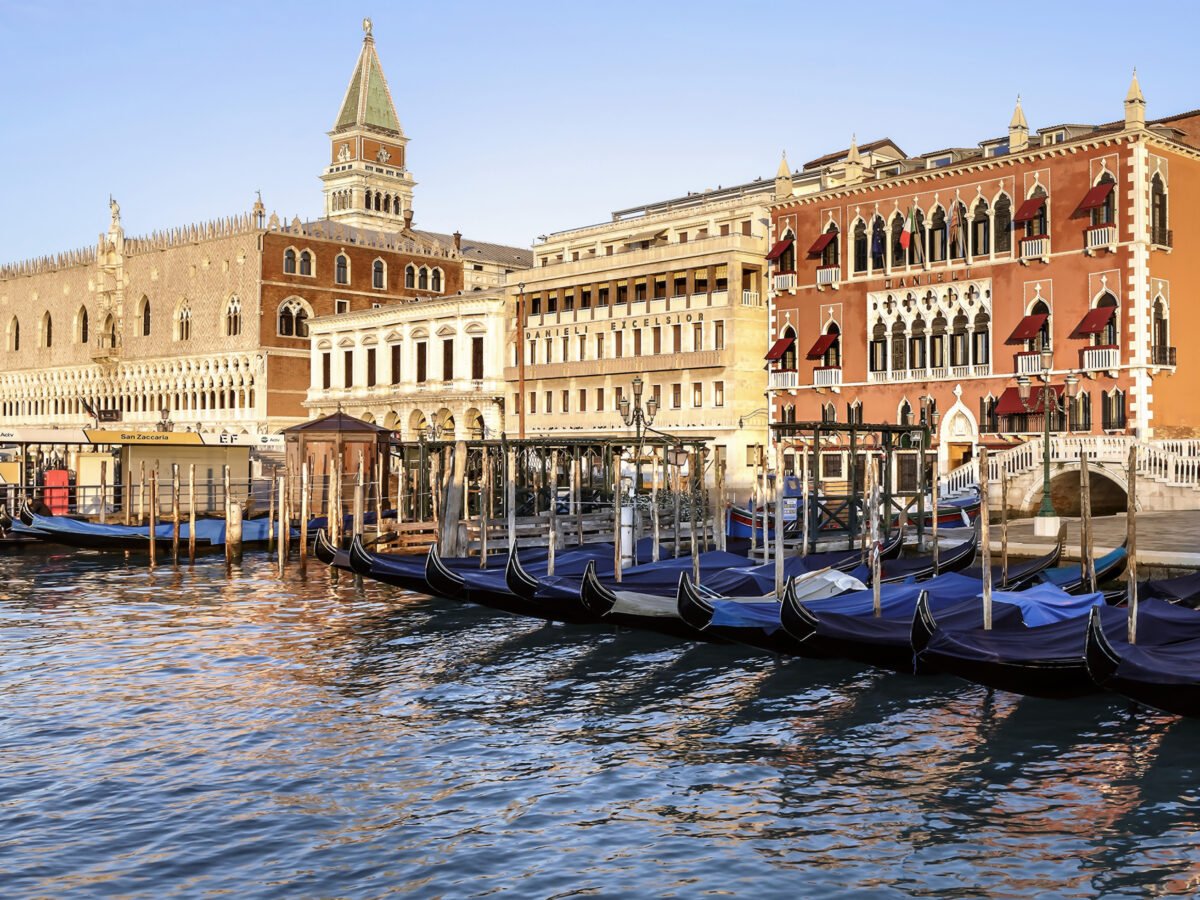
This is our boldest call. The Danieli reopened as a Four Seasons at the end of July 2026, which gives Academy members roughly six weeks of eligibility before voting closes. That is thin. But Four Seasons was named Most Admired Hotel Group in 2025, Four Seasons Firenze sat at nine and Four Seasons Bangkok at two, and the Venice reopening has been the most covered European hotel story of the year. We think it lands inside the top fifty at the first attempt. Our full assessment of the property is in our piece on the Danieli’s return.
The counter-argument, which we accept: six weeks is not enough time for 800 voters to have stayed, and the list has historically been unkind to hotels in their opening season.
How this list compares to the other rankings
There are four rankings that matter at this level and they measure genuinely different things.
The World’s 50 Best Hotels is a peer vote by industry professionals, with no criteria and no inspection. It measures reputation among people who travel for a living.
The Michelin Keys are awarded by anonymous inspectors against published criteria, in the same tradition as the restaurant stars. One, two or three Keys. It measures assessed quality rather than reputation.
The Forbes Travel Guide Star Ratings run on incognito inspections scored against up to 900 objective criteria, with inspectors anonymous at all times. It is the most systematic of the four and the least interested in atmosphere.
The Condé Nast Traveller Readers’ Choice Awards are voted by readers, not professionals. Much larger sample, much less expertise, and a strong bias towards where readers actually holiday.
Our own reviews sit closest to Michelin and Forbes in method, because they are based on a graded stay against consistent criteria, and closest to 50 Best in temperament, because we care whether a hotel is any good to be in rather than only whether it complies.
What to do with the list when it lands
Three practical notes.
Rates move. A top-ten placement is followed by rate increases and reduced availability, often within days. If a hotel you are already considering looks likely to place, book before mid September rather than after.
The 51 to 100 list is where the value is. Properties ranked in the back half get a fraction of the coverage and very little rate movement, and the quality gap between number 30 and number 70 is far smaller than the ranking implies.
Read the special awards, not just the ranking. Art of Hospitality, Eco Hotel and One To Watch are decided differently and frequently point at more interesting hotels than the top ten does.
We will update this page with the full ranking on the day, and we will say plainly whether our three predictions came off.
Frequently Asked Questions
When is the World’s 50 Best Hotels 2026 announced? Mid September 2026, in Paris. Hotels ranked 51 to 100 are published a few weeks before the live ceremony. The 2025 edition was held on 31 October, so this year’s announcement comes roughly six weeks earlier.
Which hotel is number one in the world right now? Rosewood Hong Kong, which took the top spot in the 2025 ranking. We scored it 9.2 in our own Rosewood Hong Kong review.
Where is the 2026 ceremony being held? Paris. It is the first edition of the ranking to take place outside London, and the fourth edition overall.
How are the World’s 50 Best Hotels chosen? By an anonymous Academy of more than 800 industry experts split into 13 regional groups. Each member has seven votes and may nominate any hotel. A quarter of the Academy is replaced annually, and there are no set criteria.
Is the World’s 50 Best Hotels list pay to play? The organisers state there is no pay-to-play element and no entry fee. Voters are anonymous and hotels cannot buy position.
How is it different from the Michelin Keys? The Michelin Keys are awarded by anonymous inspectors against published criteria. The World’s 50 Best is a peer vote with no criteria and no inspection. One measures assessed quality, the other measures professional reputation.
Which hotels won the 2025 special awards? Four Seasons took Most Admired Hotel Group, Soneva Fushi won Art of Hospitality, Atlantis The Royal won Best Beach Hotel, Mandarin Oriental Qianmen won Best New Hotel, Singita Kruger National Park took Art of Design and Desa Potato Head in Bali won Eco Hotel.
How many of the top 50 has Luxury Hotel Reviews stayed in? Five of the 2025 top fifty: Rosewood Hong Kong at one, Bulgari Tokyo at fifteen, Desa Potato Head at eighteen, Bulgari Hotel Roma at twenty-two and Rosewood São Paulo at twenty-four.