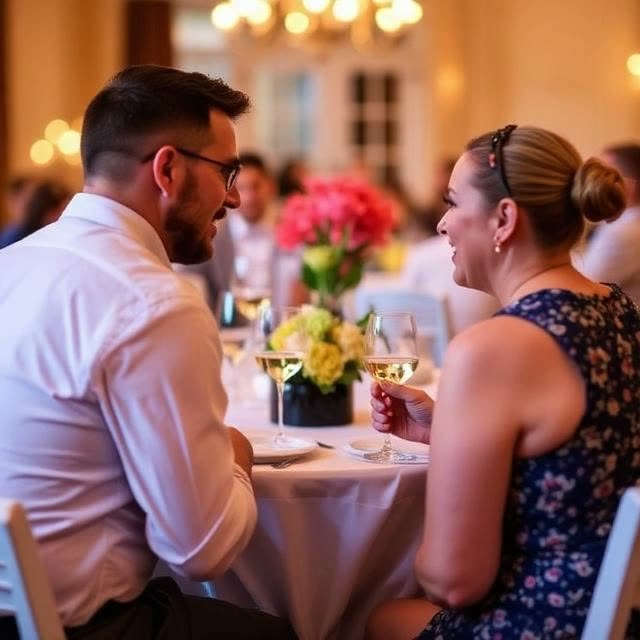
There were fourteen of us in the villa outside Ostuni, and somehow there was room for all of it. My cousin’s toddler asleep on a great-uncle’s chest at four in the afternoon. My grandmother directing the kitchen like she’d built it herself. A sixteen-year-old on the terrace steps, headphones in, present in the way sixteen-year-olds are — nearby, not narrating. Nobody had planned a single group activity that day. Nobody needed to. That’s the thing about getting three generations under one roof: the room does the work the itinerary usually has to.
The multigenerational luxury travel trend in 2026 describes the sharp rise in families booking single, shared properties — villas, estates, connecting suites — for trips that span grandparents, parents, and children, often with grandparents footing the bill and, increasingly, skipping the middle generation entirely. It is no longer a niche booking category. It is close to becoming the default.
The Multigenerational Luxury Travel Trend 2026 Data Actually Backs Up
I say “close to the default” because the numbers are not subtle. Campspot’s 2026 travel trend research found that 85 percent of families are planning a multigenerational trip this year, with Millennials — the parents in the middle of the sandwich — leading the charge at 73 percent. Bookings for multigenerational travel rose 52 percent year-over-year heading into this season. And 82 percent of travelers now say a desire for connection is actively shaping where and how they travel, ahead of price, ahead of destination prestige, ahead of almost everything else hospitality brands like to lead with in a press release.
None of this reads like a niche. It reads like a correction.
The obvious explanation is the one everyone reaches for first: families got scattered — by cities, by time zones, by algorithms that reward attention over proximity — and travel became the tool for stitching them back together. That’s true, but it’s not the interesting part. The interesting part is who’s paying.
Skip-Gen: The Trip Where the Middle Generation Is Optional
“Skip-gen” travel is exactly what it sounds like — a trip built around grandparents and grandchildren, with parents cheerfully, deliberately absent. It’s a named category now, tracked by hotel groups the way “bleisure” was five years ago. Hilton’s 2026 trends research put the number at 29 percent of travelers with children already taking these grandparent-grandchild trips. In Asia Pacific, the figure is higher still — roughly six in ten travelers have taken or are planning one, with China and India leading, at 86 and 79 percent respectively.
I don’t find that surprising. I find it overdue. In a lot of the world — mine included — the skip-gen trip isn’t a trend. It’s just what a joint family does on a Tuesday.
Here’s the more telling number: 28 percent of grandparents have already taken a trip alone with their grandchildren, and another 35 percent plan to within three years. Ask them why, and 58 percent say the same thing, more or less: they want the memory while there’s still time to make it. Call it what it is — a “Living Inheritance,” the industry’s slightly clinical term for wealthy Boomers who’ve decided their children and grandchildren need the money, and the presence, now rather than later. The nest egg is cracking open early, and a meaningful share of it is being spent on plane tickets, not left in a trust.
That’s the shift underneath the shift. This isn’t really a story about family bonding. It’s a story about a generation reallocating its balance sheet from accumulation to experience, and choosing their grandchildren’s memory of them over their estate’s line-item total. Boomers were the accumulation generation. Now they’re the generation quietly deciding that a week in Lake Como with their grandkids is worth more than another six figures compounding untouched.
What This Demands From a Property
A hotel built for individual travelers cannot simply absorb a party of eleven. It breaks. I’ve watched it happen — a beautiful five-star property with gorgeous single rooms and no way to actually get a family to eat together, sleep near each other, or move as a unit. The room count is right. The shape is wrong.
What multigenerational travel actually requires:
Villas and estates over standard rooms. Multigenerational travelers are explicitly seeking out five- and six-bedroom homes now — private kitchens, shared living rooms, a table long enough for everyone. Not because it’s more luxurious. Because it’s more possible.
Connecting suites, not adjacent ones. There’s a difference between a room next door and a room you can walk into without putting on shoes. Grandparents want proximity to grandchildren at 6 a.m. without negotiating a hallway. Parents want a door they can close.
Programming with a spread, not a schedule. The best properties I’ve stayed at for this kind of trip don’t hand you an itinerary. They hand you options at three different intensities running at once — a hike, a cooking class, a pool with actual shade and actual quiet — so a seventy-year-old and a seven-year-old can both come back to dinner with something to say.
Staff who read a room, not just a reservation. Someone has to notice that grandma needs the chair with arms, that the toddler eats at 5:30 whether or not the restaurant opens at 7. That’s not a service tier. That’s attention.
Villas for multigenerational trips like this are the entire premise of our guide to the best extended-family villas — properties that were built, or renovated, with exactly this shape of family in mind.
What It Actually Means
Here’s my gentle contrarian read, and I say this as someone who has watched hundreds of women travel together at GLO Trips and noticed the same pattern show up in family groups: nobody books a fourteen-person villa because they’ve run out of things to do apart. They book it because togetherness has become the scarce resource, not the given one.
For most of the last thirty years, luxury travel sold separation — the private suite, the adults-only wing, the invisible service, the point of luxury being that you never had to share a thing with anyone. Multigenerational travel inverts that completely. The luxury now is the opposite of privacy. It’s proximity. It’s your mother in the kitchen and your daughter on the terrace and no wall built specifically to keep them apart.
That’s the expectation flip nobody in hospitality saw coming: five-star used to mean you get your own room. Now, increasingly, it means we made room for all of you, together, and it still felt five-star.
I’ll say the honest part too, because a magazine that only tells you the pretty version isn’t worth reading. Multigenerational trips are not automatically harmonious. Put three generations of unresolved family dynamics in one villa for ten days and you don’t get healing by osmosis — you get the same old arguments with better lighting. This trend is not for families using a trip to paper over a rupture that needs a harder conversation first. And it’s not cheap: a six-bedroom estate with real staff and real privacy costs meaningfully more than three standard rooms, so the value only holds if the property does the work of actually programming for the age spread. Otherwise you’ve just paid a premium for expensive chaos.
But when it works — and increasingly, according to the data, it does — it’s not a vacation in the old sense at all. It’s closer to a reunion with better food. My grandmother didn’t come to Puglia for the view. She came because the room was big enough to hold everyone she loves in one place, at the same time, while she still can. Fourteen of us, one table, no separate rooms required. That was never really about the villa. It was about making room.
FAQ
What is multigenerational luxury travel? It’s travel booked and shared by three or more generations of one family — typically grandparents, parents, and children — usually in a single villa or estate rather than separate hotel rooms, designed so the whole family can stay, eat, and spend time together.
What is “skip-gen” travel? Skip-gen (short for skip-generation) travel is a trip taken by grandparents and grandchildren without the parents in the middle. It’s one of the fastest-growing segments within multigenerational travel, driven largely by grandparents who want dedicated time and memories with their grandchildren.
Why are grandparents paying for so many family trips right now? Wealthier Boomers are shifting spending from long-term accumulation toward present-day experience — sometimes called a “living inheritance” — funding memories and quality time with grandchildren now rather than leaving it all to an estate later.
What should I look for in a villa for a multigenerational trip? Look for real connecting suites (not just adjacent rooms), a shared kitchen and living space large enough for the whole group, ground-floor or accessible rooms for older travelers, and a property team willing to program activities across different age groups rather than a single fixed itinerary.
How do you plan a multigenerational trip so everyone actually enjoys it? Build in options at different intensities each day rather than one group activity, protect unstructured time, and choose a base — a villa or estate — that lets people opt in and out without leaving the property. Structure less than you think you need to.
Is multigenerational travel more expensive than a typical family vacation? Usually, yes — a large villa with staff costs more than standard hotel rooms — but families are increasingly finding it more efficient than booking multiple hotel rooms across a trip, and grandparents are often absorbing a larger share of the cost than in past decades.
What destinations are best suited to multigenerational travel in 2026? Destinations with strong villa and estate inventory, a range of activities for different ages, and manageable travel times tend to perform best — think the Amalfi Coast and Puglia in Italy, the Algarve in Portugal, Costa Rica, and parts of Mexico’s Riviera Maya.
Do multigenerational trips work for large or blended families? They can, though larger and blended families benefit even more from a property with true separation (multiple connecting suites, private wings) so that closeness is a choice each day, not a constant.