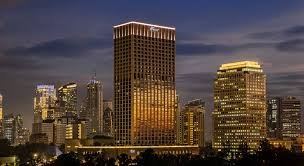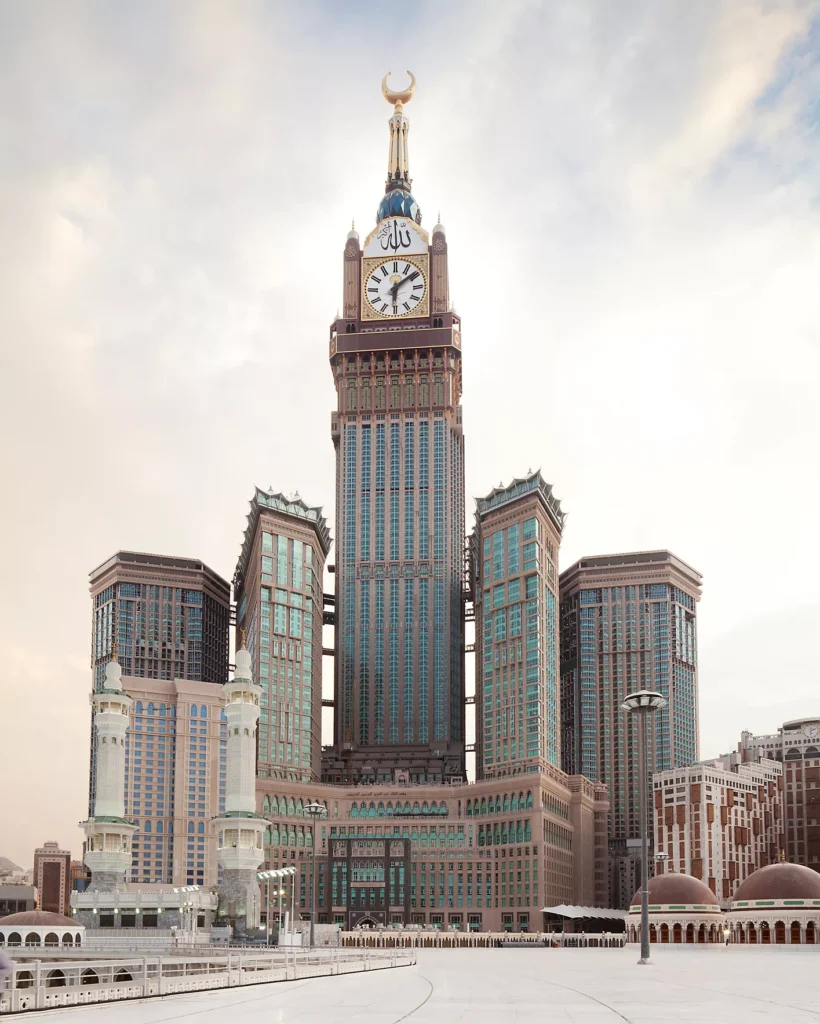
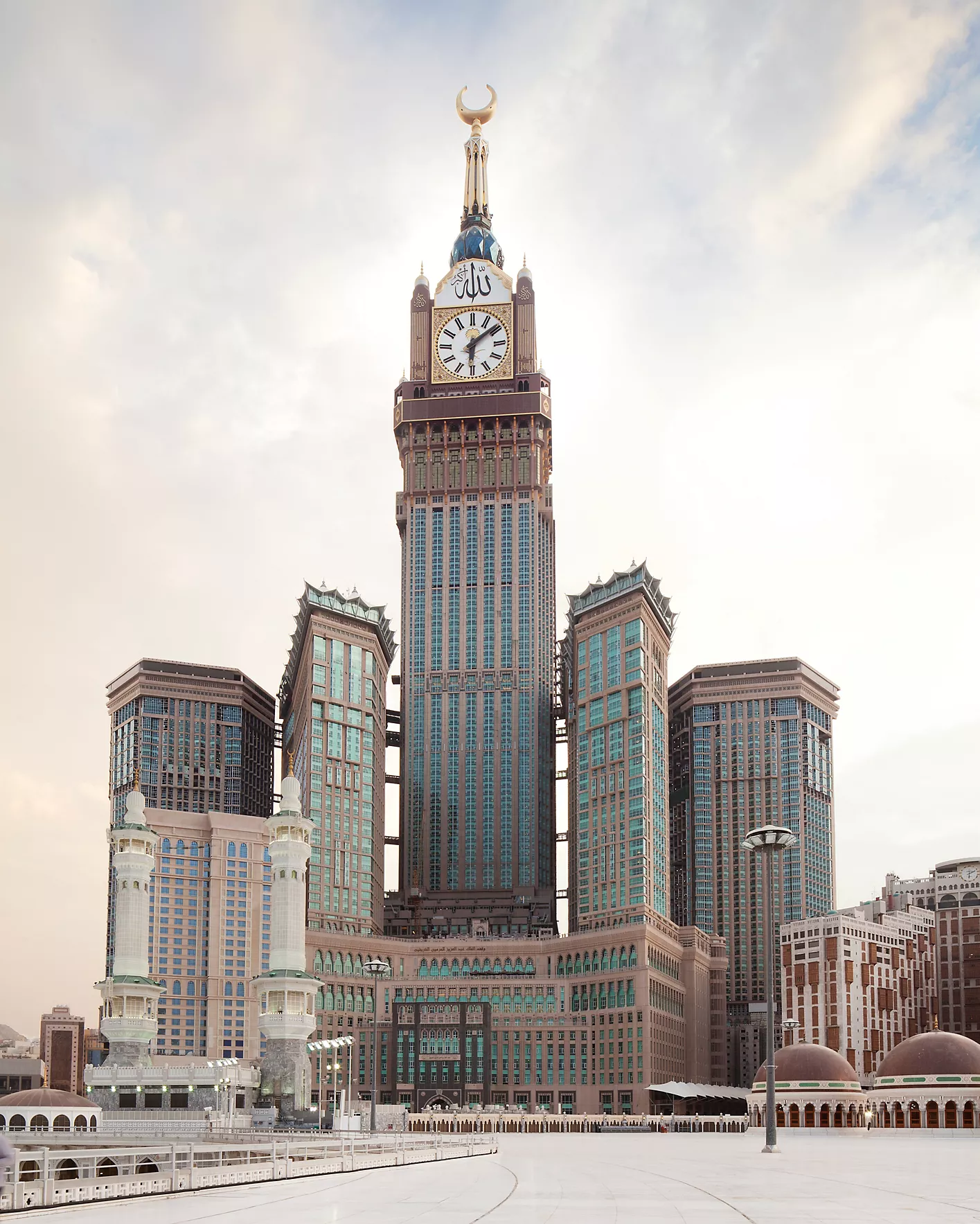
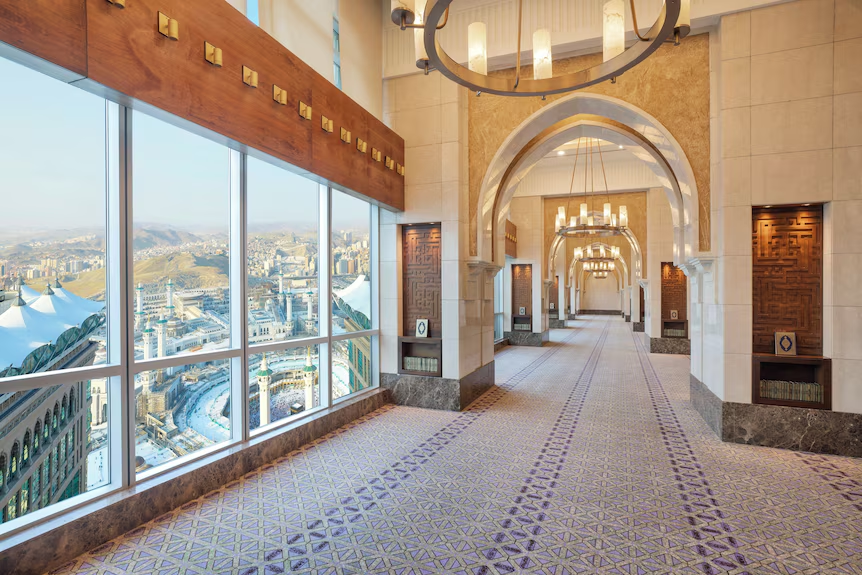
Few hotels anywhere are defined so completely by what stands next door. Fairmont Makkah Clock Royal Tower occupies the upper reaches of the Abraj Al Bait complex, directly facing Masjid al-Haram and topped by the largest clock face on earth. For the pilgrims who fill its 1,618 rooms, the arithmetic is simple: the Haram’s gates are steps away, prayer times dictate the day, and the lift you catch matters more than the minibar. We have not seen another hotel whose location does this much of the work, and the Fairmont has the sense to organise everything around it.
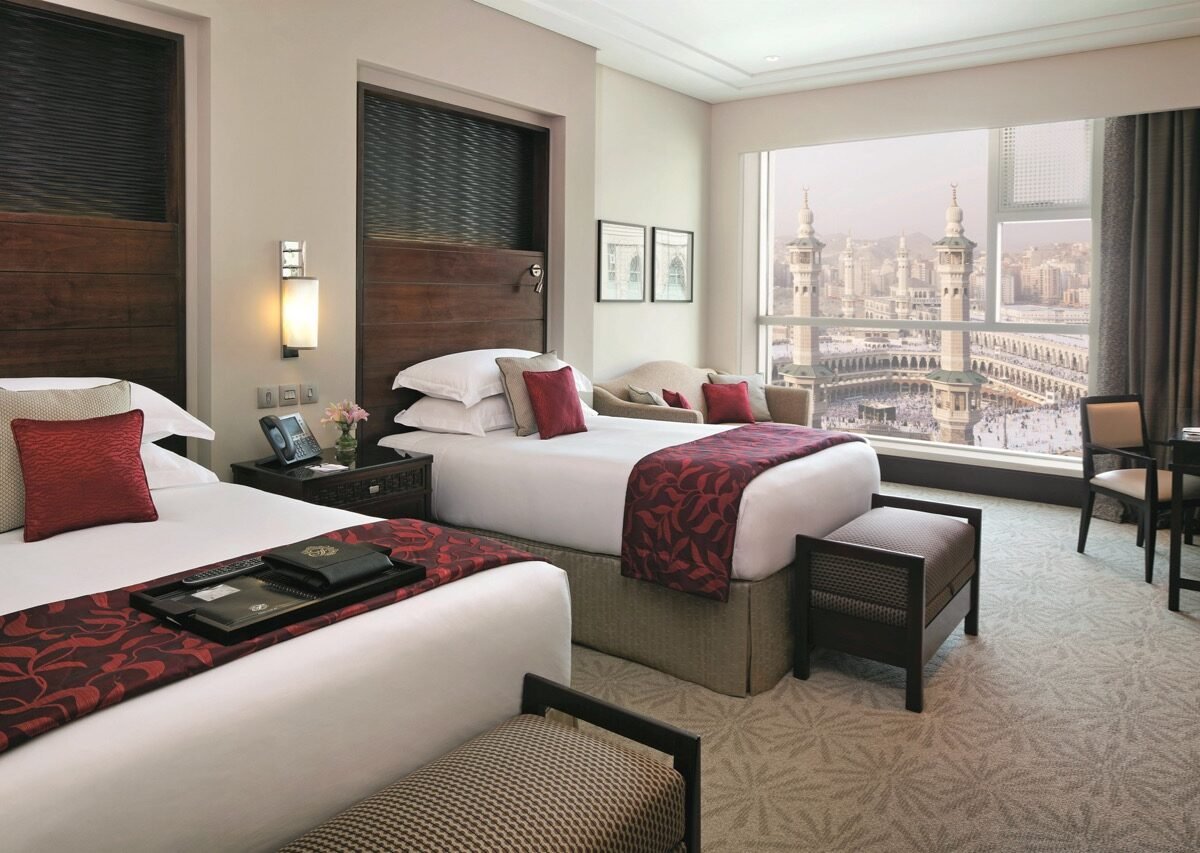
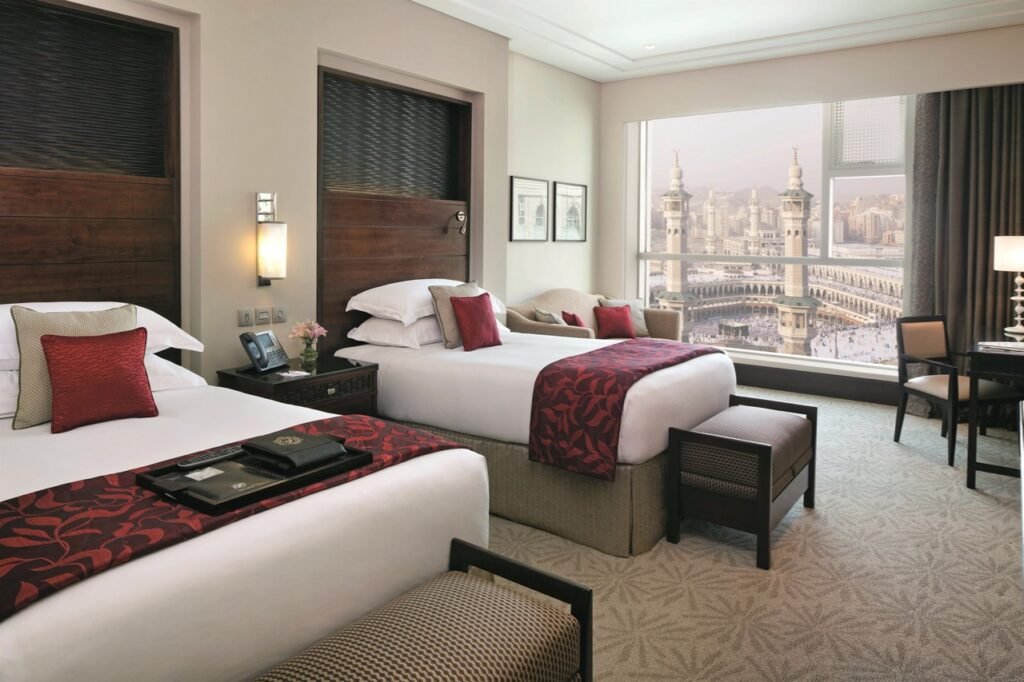
Inside, the palette is gold, beige and marble, with Arabic motifs kept restrained. Rooms come with Fairmont beds, prayer mats and the Qibla marked, and the categories climb by view: city, Haram, then the full Kaaba panorama, which turns a hotel window into something closer to a front-row seat at the centre of the Islamic world. Suites give multigenerational families space to gather and pray together, which is how many guests actually use them.
Be realistic about scale. During Hajj and Ramadan the building operates like a small city, with buffet dining engineered for thousands and lifts timed to the adhan. That machinery is the point: staff are unusually practised with elderly guests, wheelchairs and prayer-time logistics, and the Abraj Al Bait mall below covers everything from pharmacies to food courts. This is not a leisure hotel and never claims to be; as spiritual infrastructure with five-star manners, it has no real rival.