

Three luxury hotels in Hanoi can lead to three quite different trips. At the Metropole, the decision begins with a historic wing or a newer one. At Capella, it begins with whether you want theatrical design on a relatively intimate scale. At JW Marriott, it begins with the map: its lakeside address in Tu Liem is not the Hoan Kiem base offered by the other two. Before comparing suites, decide how much of Hanoi you want immediately outside the hotel, and how much time you intend to spend inside it.
Luxury hotels in Hanoi: choose the setting before the suite
This is a shortlist by purpose, not a league table of service or a claim to cover every luxury hotel in the city. Capella and Sofitel Legend Metropole are both in Hoan Kiem, at 11 Le Phung Hieu and 15 Ngo Quyen respectively. JW Marriott is at 8 Do Duc Duc Road in Tu Liem. That difference deserves more weight than an extra restaurant or a higher room category.
For a short visit built around exploring the central city, begin with Capella and the Metropole. For a stay in which gardens, indoor facilities and time at the hotel carry more weight, keep JW Marriott in the comparison. Its official page advertises a complimentary one-way shuttle to the city center; check the schedule, stops and return arrangements rather than treating it as an unlimited transfer service.
Metropole: the strongest fit for a historic-hotel itinerary
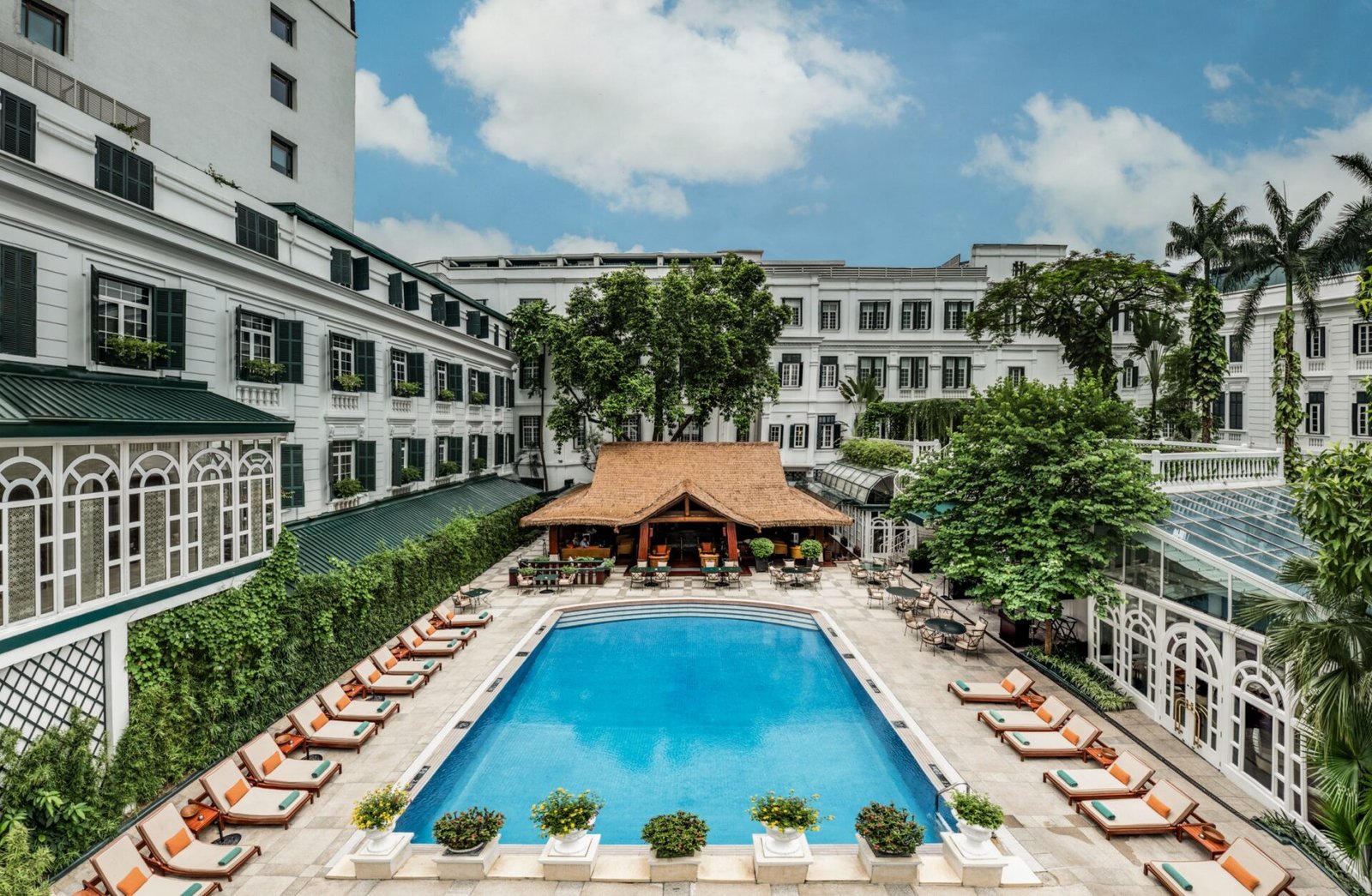
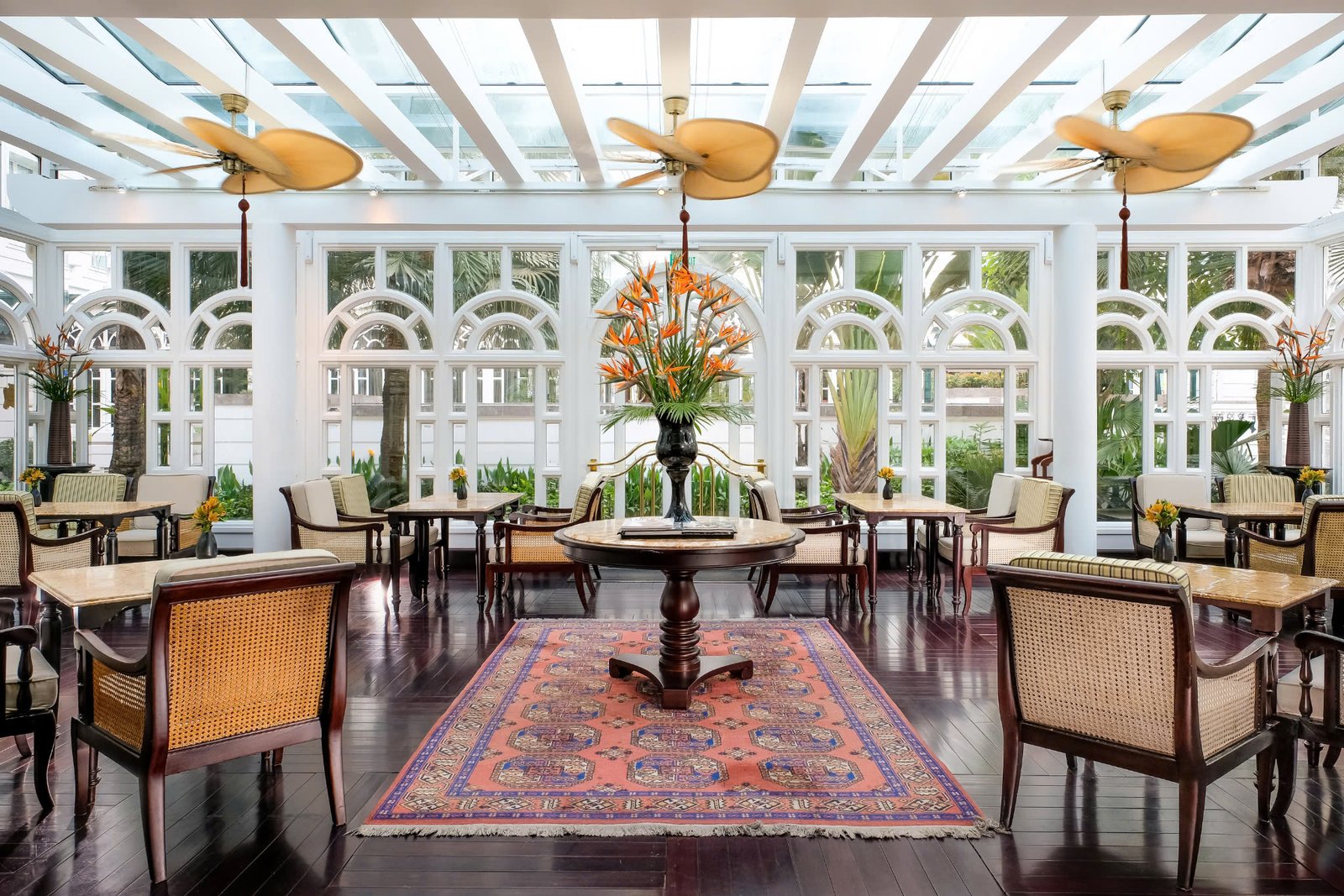
Sofitel Legend Metropole Hanoi dates to 1901. The practical distinction is that this is a 358-room-and-suite hotel with two wings, not one uniform historic interior. The Heritage Wing carries the original hotel’s story; the Opera Wing offers a newer, neoclassical setting. If you are booking because of the building’s past, make sure the room you reserve is in the wing you mean.
The hotel’s accommodation descriptions place Luxury and Grand Luxury Rooms in the renovated Heritage Wing, with hardwood floors and interiors drawing on 1920s France and colonial Indochina. The Metropole Suite, also in that wing, adds a separate living room with a sofa bed. That is a concrete reason to upgrade if you need a sitting area, rather than paying simply for a more impressive room name.
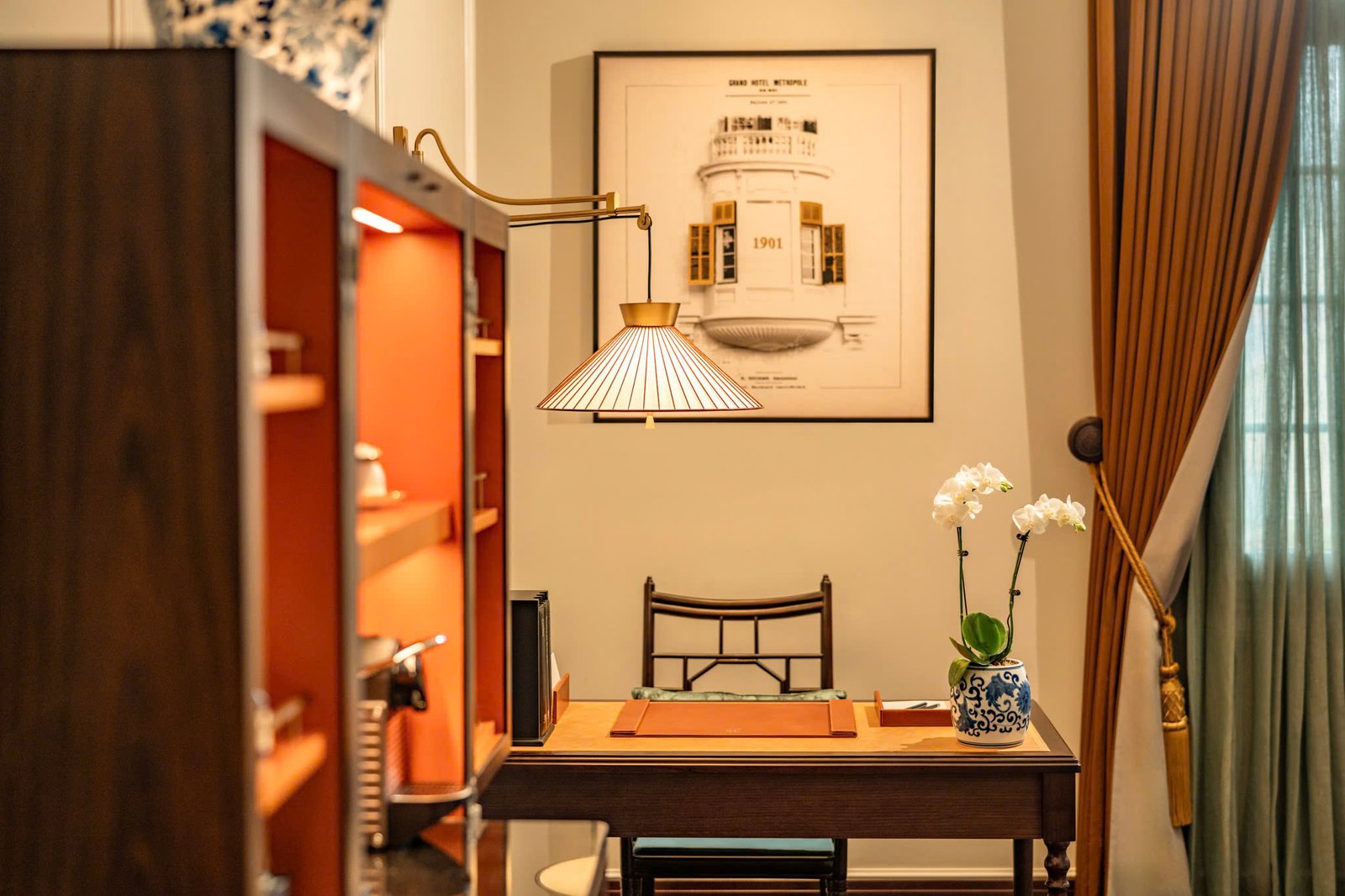
In the Opera Wing, Grand Premium Rooms occupy Club Floors, while Prestige Suites combine a bedroom with a small living room. The hotel says some Prestige Suites can connect to a Grand Premium or Premium Room. For a family or two adults keeping different hours, that arrangement deserves a closer look. The exact connecting combination matters more than the suite label.
The limitation is also its identity. At 358 keys, the Metropole is a substantial hotel, not a small private-house experience. Choose it because you want the history and the choice between wings. Do not assume that the most expensive available room is the most faithful expression of the original hotel.
Capella: the strongest fit for a smaller, design-led stay
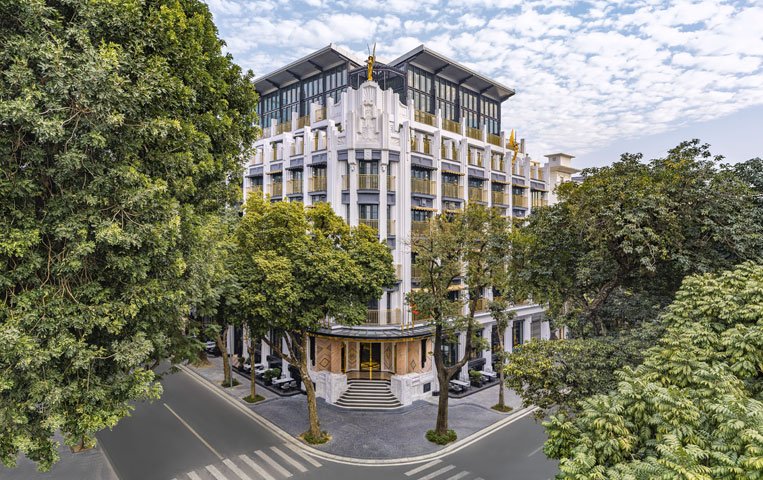
Capella Hanoi has 47 rooms and suites designed by Bill Bensley around opera and the 1920s. The references run through the accommodations and public spaces rather than appearing as a few historical photographs on a wall. It is the clear alternative if you want an explicitly designed, theatrical setting instead of choosing between the Metropole’s two wings.
Look closely at the word “balcony.” Capella describes French balconies for its Premier Rooms and suites, while the four top-floor Opera Suites have expansive outdoor terraces. If private outdoor space is the upgrade you want, those are not interchangeable descriptions. Ask for the specific room plan and terrace details rather than assuming every suite offers somewhere to sit outside.
The facilities are unusually varied for the room count: Auriga Spa, the indoor La Grotta pool, Vietnamese and international dining at Backstage, Japanese dining at Koki, and cocktails at Diva’s Lounge and The Hudson Rooms. Choose and reserve a particular dining experience rather than assuming that being a hotel guest guarantees access to a small venue on the evening you want.
Capella is the more compact proposition by inventory, but that alone cannot establish that it is quieter or that service is better. Its decorative confidence is also a matter of taste. If you prefer restrained rooms, examine the actual category photographs carefully. The opera theme is the point, not something to look past while comparing bathroom sizes.
JW Marriott: the strongest fit for a hotel-centered stay
JW Marriott Hotel Hanoi offers 450 rooms and suites, lakeside gardens and a different daily rhythm from a Hoan Kiem base. The appeal is more legible if you picture spending a meaningful part of your trip on the property, not leaving immediately after breakfast and returning only to sleep.
Wellbeing on 8 groups an indoor pool, Spa L’Occitane en Provence, fitness facilities and children’s facilities on the eighth floor. The gardens, greenhouse and Kids Café give families specific things to investigate, rather than relying on the vague promise of a family-friendly hotel. Check activity schedules and any age or supervision requirements for your own children.
Dining includes JW Café, Man Ho and French Grill. An Executive Lounge provides another possible upgrade, but only if its access and inclusions suit your routine. Compare the booked rate rather than assuming a room or membership automatically covers everything you intend to use.
The trade-off remains the location. If most of your plans are in the central city, factor in travel rather than allowing the hotel photographs to settle the choice. For a brief first visit, the two Hoan Kiem hotels remain the more straightforward starting point.
The choice in one sentence
Choose the Metropole for a historic hotel with a meaningful choice of wings, Capella for a smaller opera-inspired setting, and JW Marriott for a larger hotel-centered stay with gardens and extensive indoor facilities. None is a substitute for deciding where your days will happen.
If Hanoi is the city portion of a longer Vietnam journey, our Four Seasons Resort The Nam Hai review covers a coastal option near Hoi An. Treat that as a separate destination decision, with its own seasonal checks, rather than assuming one hotel’s weather or setting represents the whole country.
This researched hotel comparison uses official property and accommodation information checked November 7, 2026. Recommendations concern published locations, layouts and facilities, not firsthand service or dining assessments. For our reporting approach, see how we review hotels.