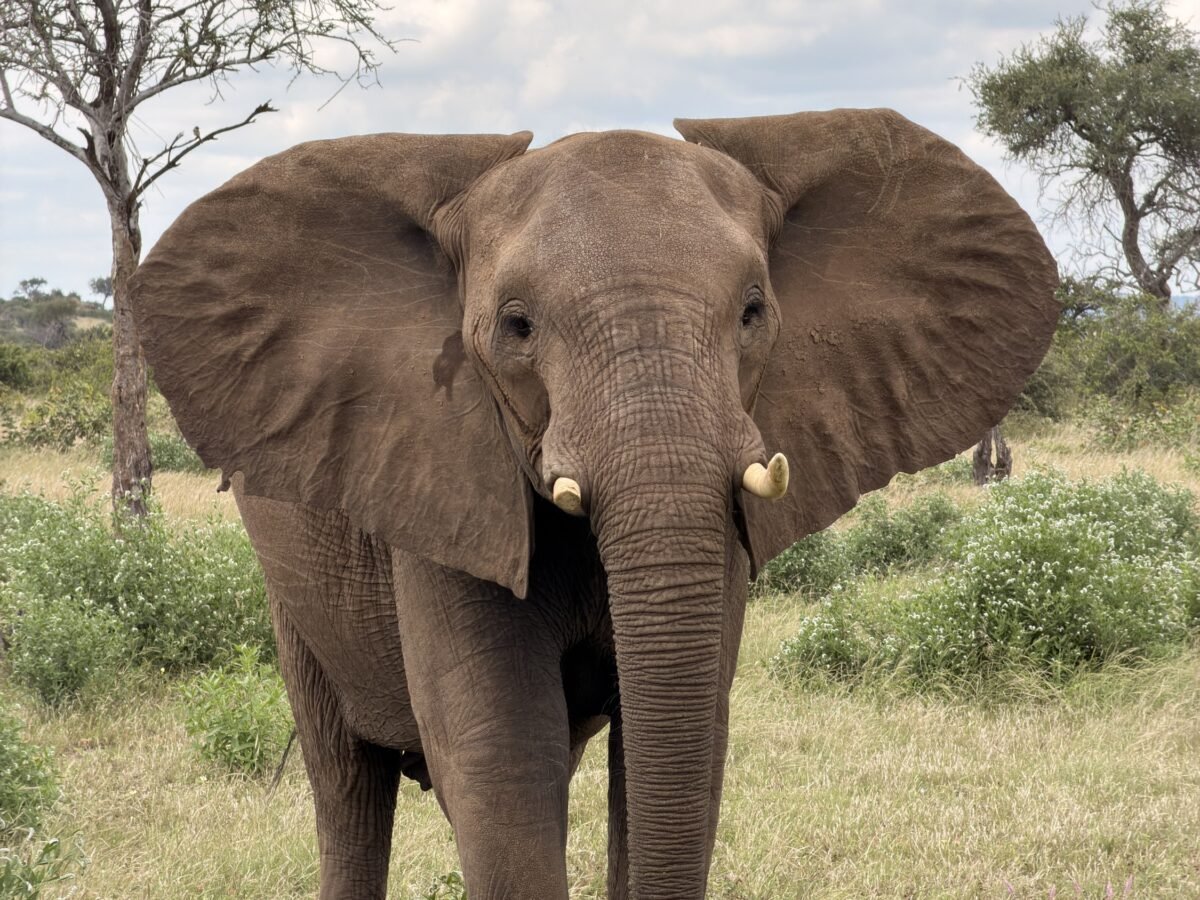
What comes to mind when you imagine a safari? Lions calling across golden plains, a river crowded with hippos, elephants moving through tall grass. In Botswana, those moments are not imagined. The country is home to about 130,000 elephants, more than any other nation on Earth, and it has set aside roughly 40 percent of its land for wildlife.
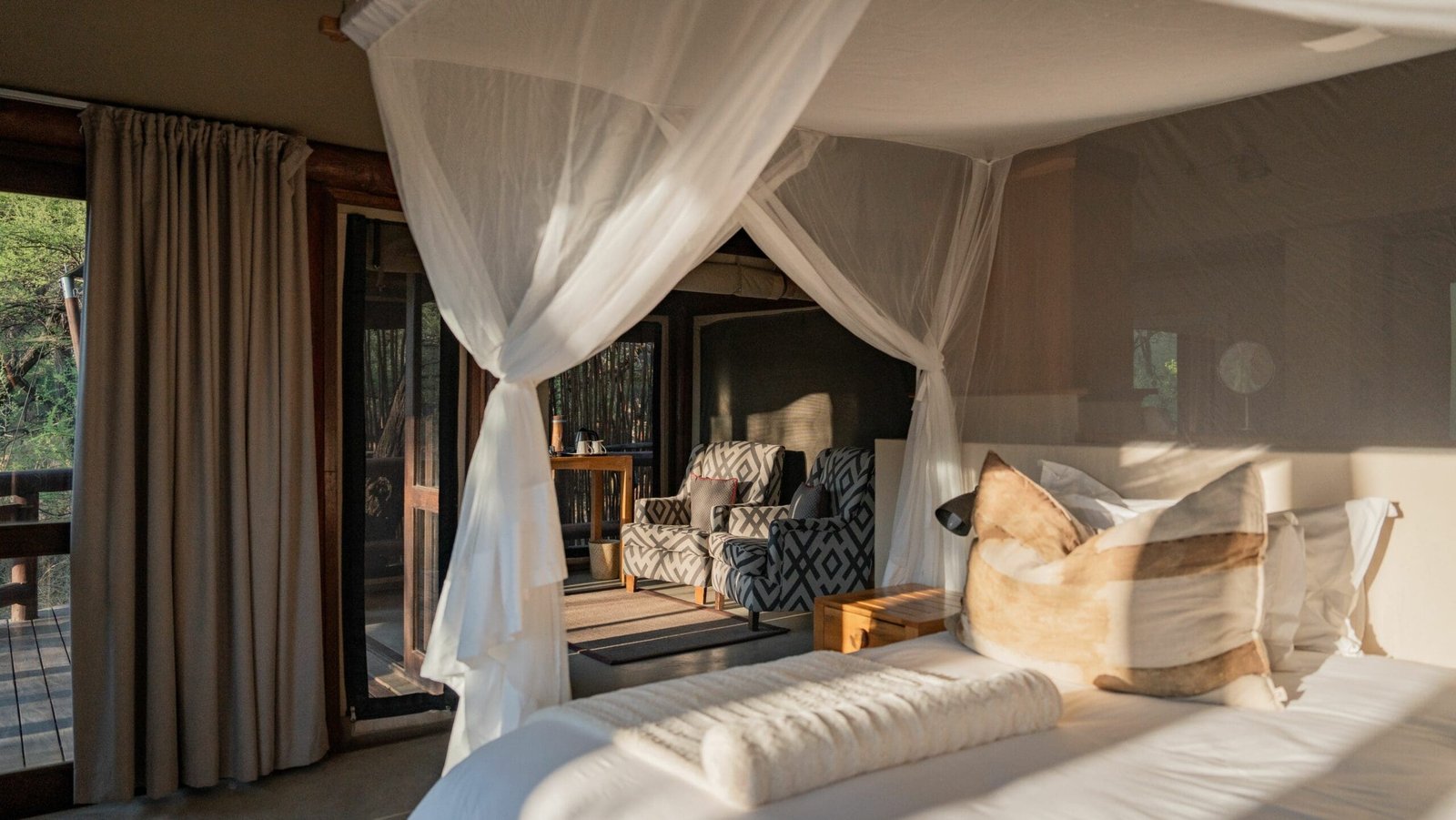
This is one of the last places where the wilderness still feels untouched, and safari at its purest and most refined. Beyond the thrill of the wildlife, it is the stillness between sightings, the warmth of the people and the ease of camp life: candlelit dinners under the stars, stories shared beside a fire, three-course meals that rival fine dining. That exclusivity is no accident of geography. It is a deliberate choice, and it shapes every part of a safari here. In Botswana, even the wild knows luxury.
Low volume, high value: why Botswana feels so exclusive
Botswana’s approach to tourism is unlike anywhere else in Africa. Rather than pursuing mass travel, the country has long championed “low volume, high value” safaris, a philosophy that puts conservation, privacy and sustainability first. In practice, that means fewer lodges, smaller groups and vast tracts of land left wild.
Many camps in the private concessions sleep 20 guests or fewer, so you can explore the bush in near solitude. You might spend hours on a game drive without crossing paths with another vehicle: just you, your guide and the quiet hum of the savanna. It is an experience that feels both intimate and immense.
The model is designed so that tourism supports conservation and local communities. That protected 40 percent is a mix of national parks, game reserves and wildlife management areas, and the north of the country forms part of the Kavango-Zambezi Transfrontier Conservation Area, which spans five countries and is the largest conservation area of its kind in the world. It is why seasoned travelers and first-timers alike call Botswana the ultimate safari destination.
What makes a luxury Botswana safari different
Botswana is landlocked, so unlike destinations where a safari is paired with a beach escape, here the safari is the experience. And the wildlife is spectacular. Lions, leopards, elephants and buffalo are all here, along with cheetahs, hippos, giraffes and countless antelope species. Rhinos, the fifth of the Big Five, are the rarest: the International Rhino Foundation counts around 345 in the entire country, closely guarded in a handful of protected areas. Elephants are the opposite story. The 2022 KAZA aerial survey put Botswana’s population at 131,909, the largest of any country, roaming freely through its parks and floodplains.
One of the greatest luxuries of a Botswana safari is solitude. Unlike Kenya’s Maasai Mara or Tanzania’s Ngorongoro Crater, where a big sighting can draw a queue of vehicles, in Botswana’s private concessions you will rarely share one with more than a handful, and often with none at all. That sense of space and silence is a reminder that true wilderness still exists. If you are weighing the two regions, our guide to the best luxury safari lodges in East Africa covers the other side of the comparison.
The guiding culture: Botswana’s true luxury
The guides here are exceptional, many of them born and raised in Botswana, with encyclopedic knowledge of the bush and tracking skills that seem almost instinctive. They learned the land from experience, intuition and generations of storytelling, not textbooks. They know which call means a lion is near, which direction the wind carries scent and how to tell a leopard’s track from a hyena’s in a single glance.
That knowledge turns a morning drive into a lesson in patience, respect and perception. You begin to see how everything in nature is connected: the shift of the wind, the alarm call of a bird, the subtle stillness before an elephant herd appears.
The standard is regulated as well as admired. To work in Botswana, a guide needs a professional guide license from the Department of Wildlife and National Parks, granted only after theory and practical exams. But it is the human side of the experience that leaves the deepest mark. Guides here are storytellers and stewards, and their pride in sharing their country is palpable. It gives you the sense that you are not just visiting the wild but being invited into it.
As the campfire burns low, your guide might talk about how the constellations have guided travelers for centuries, or share tales passed down through their elders. It is in those quiet moments that you realize the greatest luxury of all: feeling connected to something far bigger than yourself.
A sanctuary for wildlife, and for you
Botswana’s magic lies not only in its wildlife but in its remoteness. With roughly four and a half people per square kilometer, it is one of the most thinly populated countries in the world, and outside the cities human presence fades quickly into open skies and endless plains. Much of the safari country is reachable only by light aircraft or off-road track, which heightens the sense of adventure and isolation.
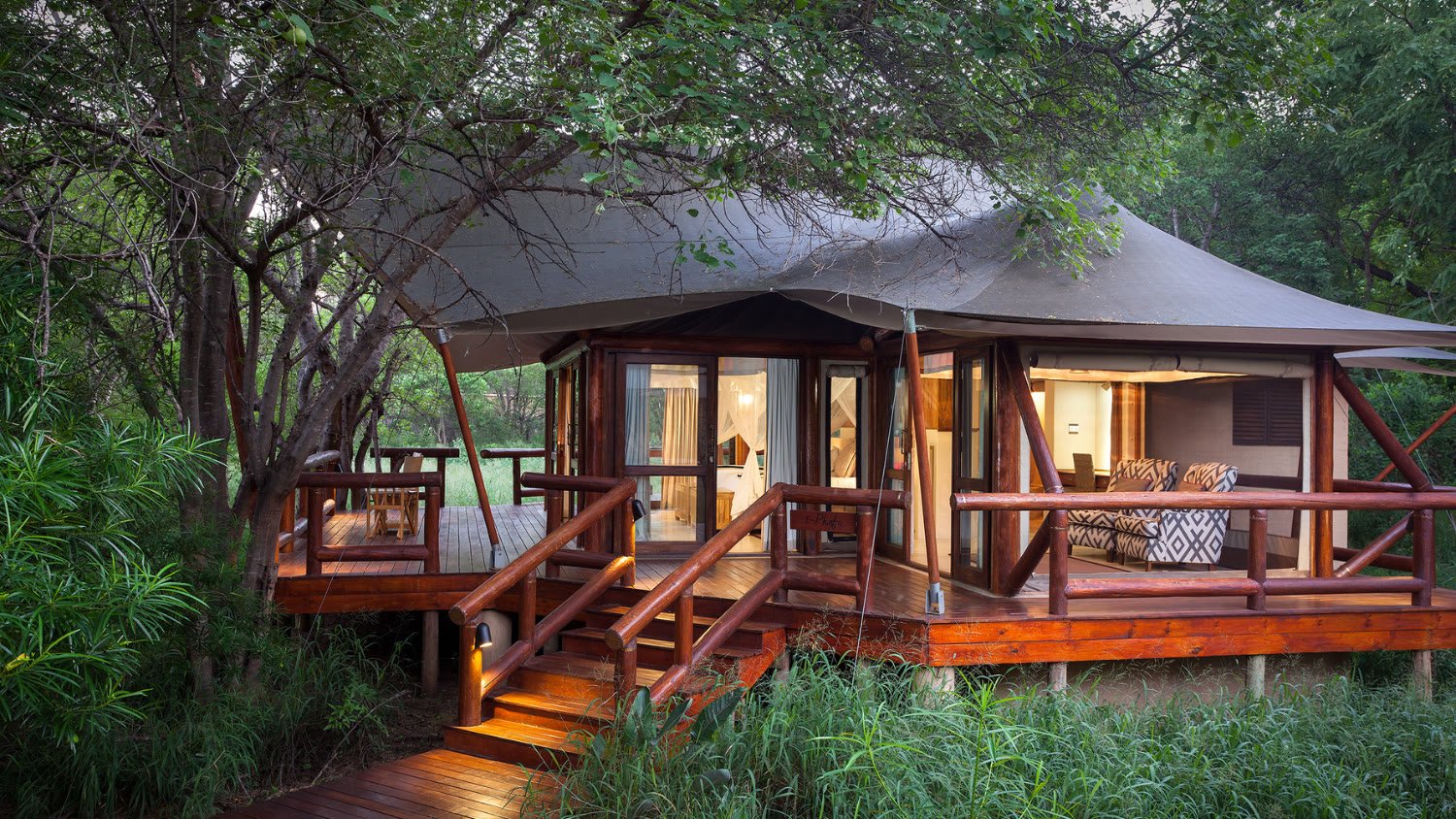
The air is clean, the silence profound and the landscapes vast enough to make you feel wonderfully small. This is safari at its most authentic: luxurious, but never contrived.
It is this side of Botswana that inspired the Botswana GLO Trip, an intimate, women-only retreat founded and hosted by Chhavi Verg for travelers who want both transformation and adventure. Set in Mashatu, the Land of Giants, in the Northern Tuli Game Reserve, the retreat combines mindset workshops, daily game drives and once-in-a-lifetime experiences, each designed to help guests reconnect with their confidence, clarity and sense of wonder.
What to expect on a Botswana safari
No two safaris in Botswana are the same. The landscapes shift dramatically from north to south, and the rhythm of a trip shifts with them. One day you are gliding silently through the mirrored channels of the Okavango Delta in a mokoro, a traditional dugout canoe. The next you are driving across golden savanna, watching dust swirl in the wake of a moving elephant herd.
A day in camp
A typical safari day begins before sunrise, when the air is still cool and the bush hums with anticipation. A gentle knock on your door wakes you, and steaming coffee is waiting by the fire. Morning game drives often bring the most memorable moments: lions returning from the hunt, leopards stretching in the dawn light, antelope grazing in soft golden mist.
By late morning you are back in camp for a hearty brunch and some well-earned rest. The heat of the afternoon invites stillness and reflection, perhaps a dip in the pool, a siesta in the shade or a quiet hour journaling as birdsong fills the air. Afternoon tea brings scones and pastries, and as the sun softens again, the evening drive beckons.
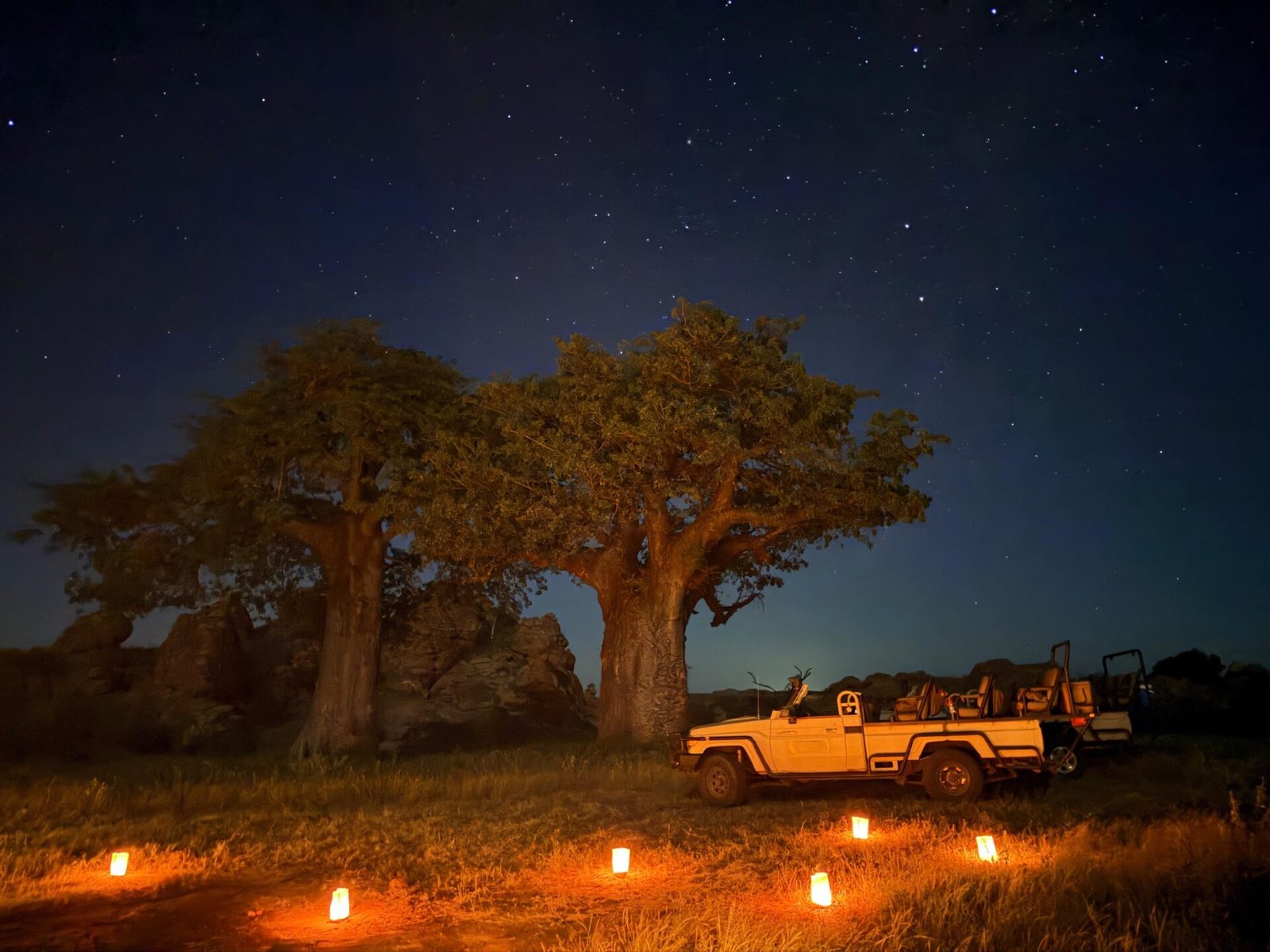
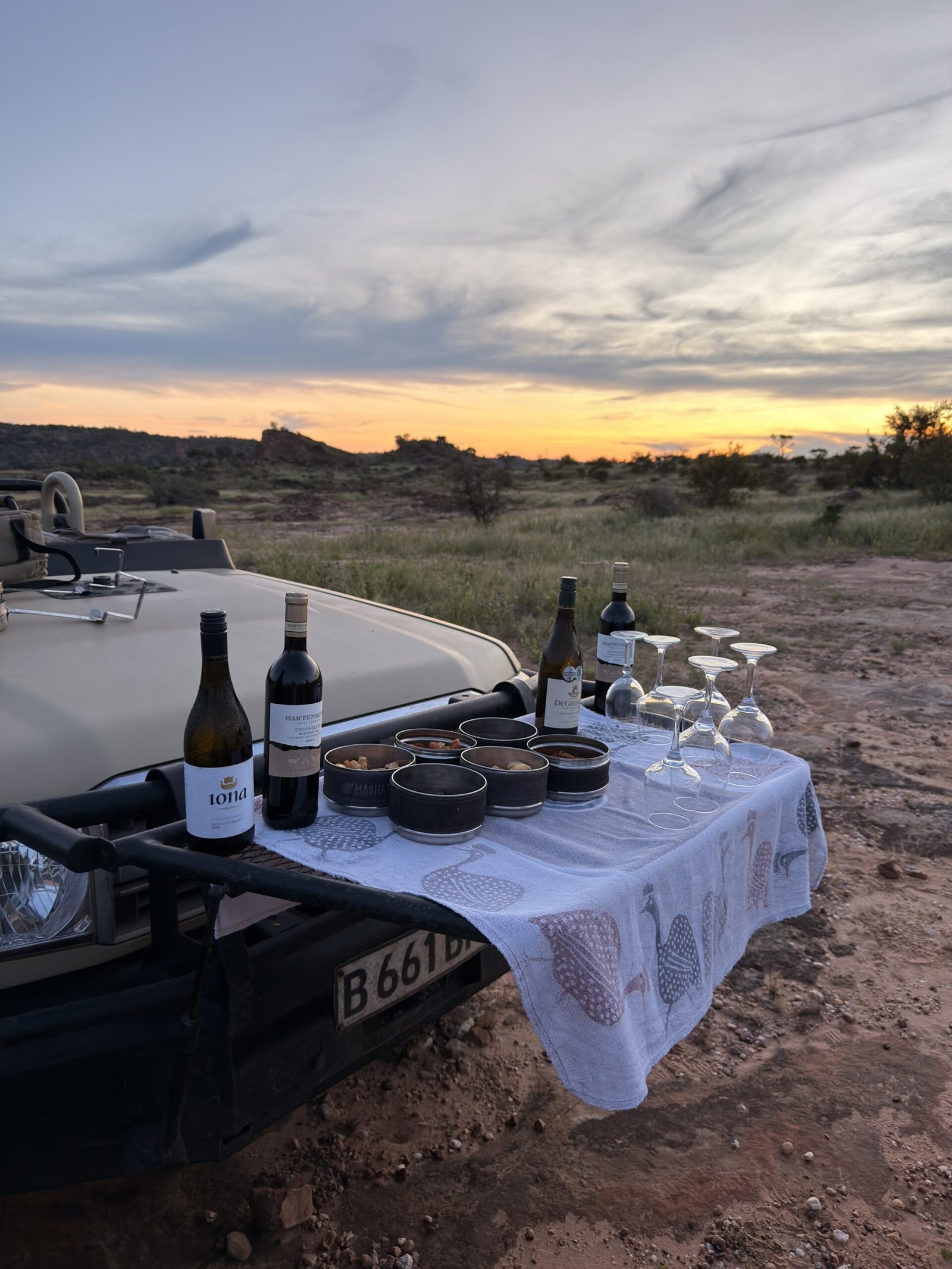
At dusk the bush becomes a completely different world: elephants cooling off in the shallows, hippos emerging from the water and the first stars appearing as the bush shifts into its nocturnal rhythm. Back at camp, dinner is often an occasion in itself, three courses served under the stars with candles flickering and the occasional roar echoing in the distance. Conversations linger long after dessert.
Beyond the sightings and the comfort of camp, a safari here is also deeply reflective. Nature this vast, raw and alive strips away distraction, and you begin to feel small in the best way: grounded, present and aware of life in its purest form.
When to go, and how to plan
Botswana works year-round. The dry season, May to October, is the most popular and the most expensive, when wildlife congregates around the remaining water and sightings come thick and fast. Days are mild in June and July, with highs averaging around 26°C (79°F) in Maun, the gateway to the Okavango Delta, but nights can fall close to freezing. By October, highs average about 36°C (97°F).
The green season, November to April, brings the rains, newborn animals, migratory birds and far fewer visitors. A trusted safari operator will handle most logistics, from airport transfers to light-aircraft flights between camps. For seasonal detail, entry requirements, health advice and a packing list, read our companion piece, The Ultimate Botswana Safari Guide: When to Go and How to Plan.
The Final Word: leaving with more than photos
A safari in Botswana leaves you changed. It is not just about the animals you see but about the feeling they awaken in you.
It is not a safari for everyone. The low-volume model comes at a price, and the remote camps take light-aircraft flights and time to reach, so Botswana rewards travelers who make the safari the whole trip rather than an add-on. For them, it delivers exactly what the word exclusive should mean: fewer people, more wilderness and guides who know it intimately.
You come home carrying more than memories: stillness, perspective and a renewed understanding that the most beautiful things in life do not need to be chased, only witnessed. To experience that for yourself, explore the Botswana GLO Trip and reconnect with the wild, and with who you truly are.
This Where to Go guide is compiled from official Botswana conservation figures, the 2022 KAZA elephant survey, climate records for Maun and published safari-camp and guiding information. It is not a firsthand hotel review.