
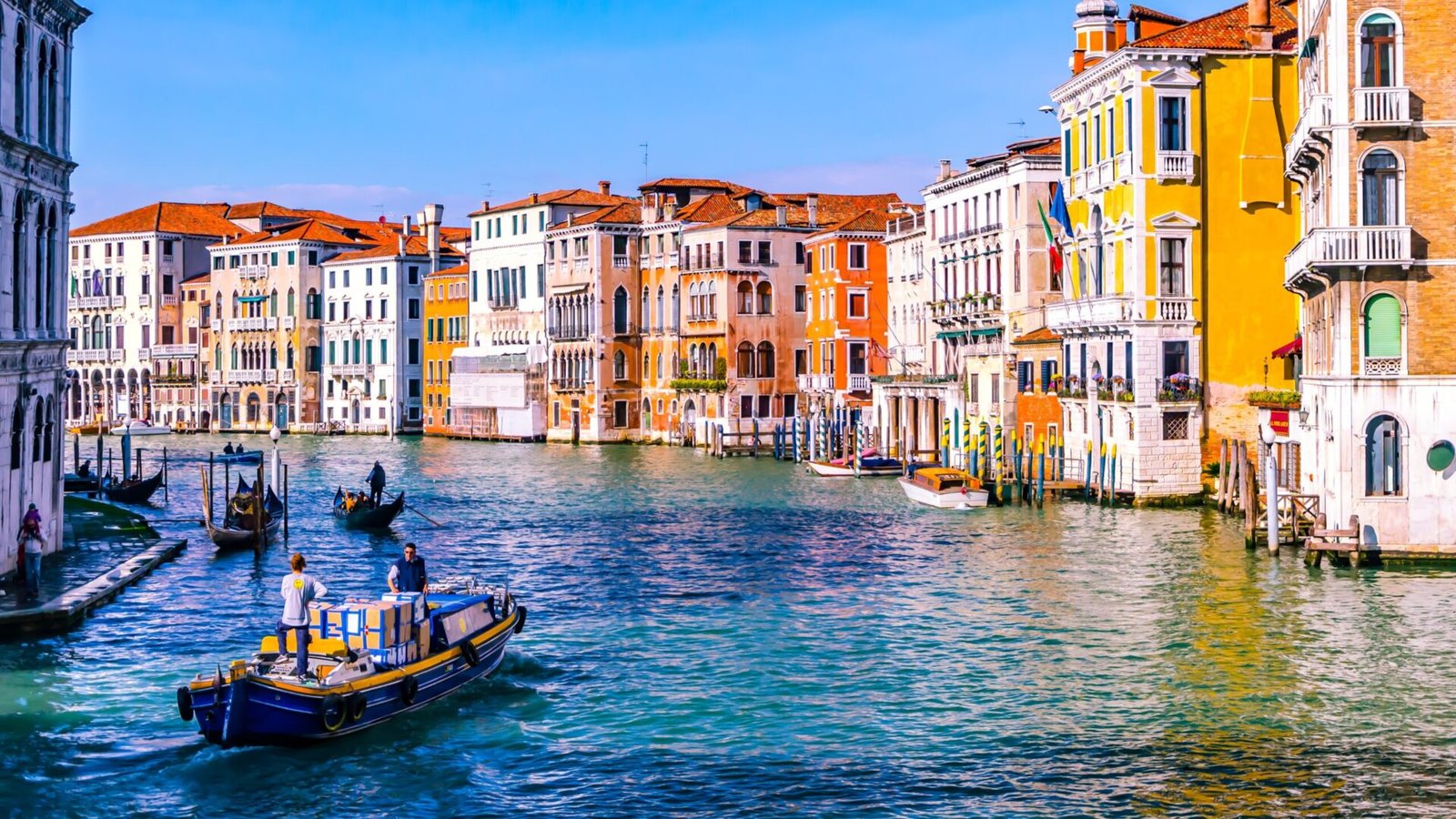
There is a version of Venice that almost nobody books, and it is the good one. It arrives in the second week of November, when the day trippers have gone, the cruise season has wound down, hotel rates have fallen by half, and the fog sits on the water at seven in the morning so thickly that you cannot see the far side of the Grand Canal. Restaurants take walk-ins. The Accademia has room to stand back from the paintings. And yes, occasionally, water comes up through the drains in St Mark’s Square, which is precisely why the city is empty and cheap.
The best time to visit Venice depends on what you are willing to trade. This is a season by season guide covering crowds, weather, acqua alta, the access fee, hotel rates and the festival calendar, with an honest case for going in the months everyone else avoids.
The short answer
For the best balance of weather, crowds and cost, go in late September and October. For the best value and the most atmospheric city, go in November or late January. For guaranteed sunshine and the worst of everything else, go in June or July. Avoid August, which combines heat, humidity, closed local businesses and peak visitor numbers into the least rewarding version of the city.
The detail is where the decision actually gets made, so here it is by season.
Spring: March to May
Spring is the most conventionally pleasant time to be in Venice, and the city knows it. Temperatures climb from the low teens in March to the mid twenties by late May, the light is excellent, and the gardens of the Biennale open for the season.
It is also when the crowds return in force. Easter is the sharpest spike in the calendar outside Carnival, and by May the queues at the Doge’s Palace and the Basilica are substantial from mid-morning onwards.
Spring is also when the access fee applies, which we cover in detail below. March is the value month here: unsettled weather, but rates well below April and no fee days at all.
Best for: the Biennale, long daylight, garden and island trips. Worst for: queues, rates, and the paperwork of a fee that mostly affects everyone except you.
Summer: June to August
Summer in Venice is hot, humid and busy, and the city is at its least gracious. Daytime highs sit in the low thirties, the humidity of the lagoon makes it feel higher, and the smaller canals can smell in still weather at low tide. Mosquitoes are a genuine consideration in the evenings.
Crowds peak, and the compression is worse than the raw numbers suggest, because Venice’s visitor flow funnels along two or three routes between the station, the Rialto and St Mark’s. Those corridors are unpleasant between ten and five.
Two things redeem summer. The first is Redentore, on the third weekend of July, when a pontoon bridge crosses the Giudecca canal and the city holds a fireworks night that locals genuinely turn out for. The second is that the evenings are long, and Venice after eight in July, once the day trippers have left, is a different and far better city.
August is the weakest month. Many family-run restaurants and shops close for the Italian holidays, and the residents who give the city its texture are largely elsewhere.
Best for: Redentore, late evenings, families tied to school holidays. Worst for: comfort, value, and any sense of the city as a functioning place.
Autumn: September to November
This is the sweet spot, and September and October are the two months we recommend most often.
September opens with the Venice Film Festival on the Lido and the Regata Storica on the Grand Canal, both worth planning around, though the festival lifts hotel rates across the city for its duration. By late September the heat has broken, the water has cleared, and the light turns to the flat gold that Venetian painters spent four centuries chasing.
October is quieter still. Temperatures sit in the high teens, rain becomes more frequent but rarely persistent, and hotel rates begin their slide. The Biennale is still open. This is the month to come if you want the conventional Venice experience without the conventional Venice queue.
November is the month people are wrong about, and it deserves its own section.
The case for November
November is Venice’s cheapest month and its most atmospheric. Luxury hotel rates fall sharply from their September peak, and properties that are impossible to book in May have availability at short notice. The city belongs to Venetians again.
The reason for the discount is acqua alta, the seasonal high water that peaks between late October and December. The reputation is worse than the reality now. The MOSE flood barriers at the lagoon inlets have been operational since 2020 and are raised when high tides are forecast, which has prevented the great majority of the floods that used to close St Mark’s Square. Minor high water still occurs, usually for a couple of hours around the peak tide, usually in the lowest parts of the city, and usually with duckboards already laid out by the time you notice.
What you get in exchange is the version of Venice that made its reputation: fog, empty campi, gondolas moored and covered, and restaurants where the waiter has time to talk to you. Bring proper waterproof boots, check the tide forecast published by the city’s tide forecasting centre each morning, and accept that you may lose an hour of one day. It is the best trade in the Italian travel calendar.
One caveat: daylight is short, damp cold cuts through inadequate coats, and some island services run reduced schedules. This is a walking-and-eating trip, not a beach-and-boat one.
Winter: December to February
December is quiet and cold until the Christmas period, when rates and visitor numbers lift sharply for a fortnight. January is the emptiest month of the year in Venice and, if you can tolerate temperatures around five degrees and frequent fog, one of the most rewarding.
Carnival changes everything. Held in the run-up to Lent, usually across February, it brings the largest concentration of visitors outside high summer, with hotel rates to match. It is spectacular and it is extremely crowded, and the two are inseparable. If Carnival is your reason for coming, book accommodation six months ahead and stay near where you want to be, because moving across the city during the main weekends is slow.
The weeks immediately after Carnival are among the best value in the calendar.
The Venice access fee, explained properly
This trips up more visitors than anything else, mostly because the coverage of it is confusing.
In 2026 the city charged day visitors on 60 days between 3 April and 26 July, generally Fridays to Sundays plus holiday periods, enforced between 08:30 and 16:00. The fee was 5 euros if booked at least four days ahead and 10 euros for late bookings, and it applied to the historic centre only, not to Murano, Burano, the Lido or the other lagoon islands. Euronews published the full 2026 calendar when it was announced.
Four things matter if you are staying in a hotel.
- You are exempt. Overnight guests anywhere in the municipality, including Mestre and the Lido, do not pay the access fee. You pay the separate city lodging tax through your hotel instead.
- You still have to register. The exemption is not automatic. You register through the official portal, enter your accommodation, and receive a QR code proving the exemption. Carry it.
- Arriving after 16:00 sidesteps it entirely. The window closes at four in the afternoon, which is why an evening arrival is the cleanest way into the city on a fee day.
- The calendar changes each year. The 2027 dates had not been published at the time of writing. Check the official Venezia Unica portal before you travel.
The practical conclusion is unglamorous but true: staying the night removes the fee, removes the queue at the checkpoints, and gives you the city in the two hours either side of the day-tripper window, which are the best two hours of the day.
Where the season changes what you should book
Venice’s best hotels price seasonally, and the swing is larger at the top of the market than the bottom. That is worth knowing, because the off season is when the hotels you have been reading about become achievable.
Aman Venice is our highest-scoring property in the city at 9.6, a Grand Canal palazzo that feels borrowed rather than sold, and it opens from around 1,650 euros a night in peak season. Radisson Collection Palazzo Nani is a proper palazzo conversion in Cannaregio, the neighbourhood you actually want to sleep in, from around 380 euros. Hilton Molino Stucky on the Giudecca is the outlier: a Victorian flour mill with the only rooftop pool in Venice and the best sunset bar on the lagoon, from around 290 euros, though the vaporetto crossing is part of the deal.
In November and January, all three sit materially below those figures. The luxury upgrade is cheapest exactly when the city is quietest, which is the whole argument of this article in one sentence.
The other reason to look at Venice this autumn is the Danieli, reopened as a Four Seasons after its long restoration. We covered what has changed in Inside the Danieli’s Return.
What changes practically between seasons
Beyond weather and crowds, four things move with the calendar and catch people out.
Water transport. Vaporetto services to the outer islands thin out from November, and the Alilaguna airport boats run to a reduced winter timetable. In high summer they run frequently but are packed at the times you want them. A private water taxi from Marco Polo costs the same in either season and is worth it on arrival with luggage, whatever month you travel.
Opening hours. Museums and churches move to shorter winter hours from around November, and some island glassworks and smaller collections close entirely in January. Check individually rather than assuming.
Restaurant bookings. From April to October the good places need reserving days ahead. From November to February you can generally walk in, which materially changes how you plan a day.
What to pack. Venice is a walking city with no cars and a great deal of stone and water. In winter that means waterproof boots rather than fashionable shoes, and in summer it means genuinely comfortable footwear, because you will cover far more ground on foot than you expect.
Month by month at a glance
- January: emptiest, coldest, cheapest. Excellent for museums and restaurants.
- February: Carnival dominates. Peak rates during, low rates after.
- March: shoulder season, unpredictable weather, good value and no access fee days.
- April: Biennale opens, Easter spike, access fee begins.
- May: warm and busy. Vogalonga rowing regatta mid-month.
- June: hot, very busy, long evenings.
- July: hottest and most crowded. Redentore is the highlight.
- August: avoid. Heat, humidity, closures, peak numbers.
- September: Film Festival and Regata Storica. Superb weather, high rates.
- October: our overall pick. Mild, quieter, still fully open.
- November: best value. Fog, acqua alta risk, an empty city.
- December: quiet before Christmas, brief spike after.
How to choose your dates
- If this is your first visit: late September or October. You get the city working properly, without the summer compression.
- If you have been before: November or January. The second visit is always better in the off season, because you are no longer obliged to queue for anything.
- If you are travelling with children in school holidays: late October half term beats August by a wide margin on every measure except sea temperature.
- If you want a specific event: book eight to twelve weeks ahead for the Film Festival and Regata Storica, and four to six months ahead for Carnival.
- If value is the priority: the fortnight after Carnival and the whole of November. Rates at the top hotels fall further than at the mid-market ones.
- If you are combining Venice with the rest of Italy: October pairs well with Sicily and the south, where the sea is still warm. See the Italy hub for the full picture.
- If you are a day visitor between April and July: register and pay at least four days ahead, or stay overnight and register the exemption instead. Staying the night is almost always the better trip anyway.
Frequently asked questions
What is the best month to visit Venice?
October, for the best combination of mild weather, manageable crowds and reasonable rates. September is warmer but busier and more expensive, and November is cheaper but colder and wetter.
Is acqua alta still a problem in Venice?
Much less than it was. The MOSE barriers have been operational since 2020 and are raised when high tides are forecast, preventing most major flooding. Minor high water still occurs in autumn and early winter, typically for a short period around peak tide and mainly in the lowest areas around St Mark’s.
Do I have to pay the Venice access fee?
Only if you are a day visitor entering the historic centre on a designated fee day. In 2026 the fee applied on 60 days between 3 April and 26 July, between 08:30 and 16:00, at 5 or 10 euros depending on how far ahead you booked. Overnight guests are exempt but must still register to obtain a QR code.
When is Venice least crowded?
January, followed by November and the weeks immediately after Carnival. These are also the cheapest periods for luxury hotels.
Is November a good time to visit Venice?
Yes, if you pack for it. You get the lowest rates of the year, almost no queues and the city’s most atmospheric weather, in exchange for short daylight, damp cold and a modest risk of a couple of hours of high water.
When is Carnival in Venice?
Carnival runs in the weeks before Lent, usually falling across February and ending on Shrove Tuesday. Dates move each year with Easter, so confirm before booking.
How many days do you need in Venice?
Three nights is the sweet spot: one for the headline sights, one for the islands, one for the neighbourhoods most visitors never reach. Two nights works if you arrive in the afternoon and treat the evenings as the main event.
The last word
Almost everything written about when to visit Venice optimises for weather. That is the wrong variable. Venice is a walking city of stone, water and interiors, and it is at its best when there is room to walk. The weather you can dress for. The crowds you cannot.
Go in October if you want the easy version. Go in November if you want the one people write books about.
Start planning with our Venice destination page, which collects every property we have reviewed in the city, or browse the wider Italy hub and the Historic collection for hotels where the building is the reason to book.