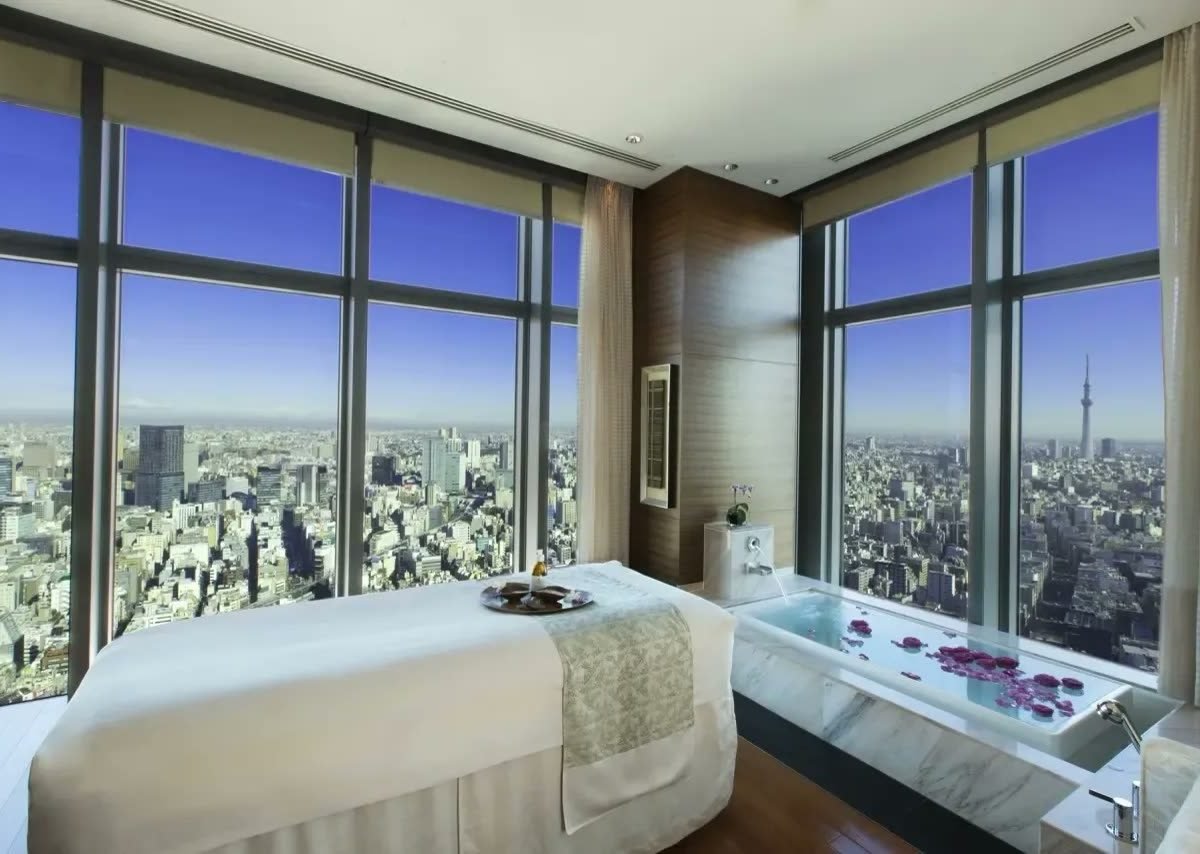

A woman flies to Manhattan, checks into a 900-square-foot suite at the Park Hyatt, and does not go to the theater, does not eat at the restaurant everyone is posting about, does not do a single thing you would put in a caption. She sleeps. On a $30,000 smart mattress that reads her body like a second language and adjusts itself all night so she doesn’t have to wake up and do it herself.
That’s sleep tourism: travel built around the goal of sleeping well, using sleep-optimized rooms, wearable tracking, and expert-designed programming instead of sightseeing as the reason for the trip. It’s now one of the fastest-growing categories in wellness travel, and it’s quietly rewriting what a five-star stay is supposed to deliver.
For years, luxury hotels sold you the view. Now the best ones are selling you the blackout curtain.
The Shift: From Amenity to Architecture
Sleep used to be something a hotel assumed you’d get around to. A turndown chocolate, a decent pillow menu, maybe a white noise machine buried in the closet — a courtesy, not a commitment.
That’s over.
The global sleep tourism market is projected to hit roughly $82–96 billion in 2026, growing at a compound rate north of 8% a year through the early 2030s, according to multiple market research firms tracking the category. The National Sleep Foundation’s most recent Sleep in America poll found six in ten adults aren’t getting the recommended seven to nine hours of quality sleep, with nearly four in ten struggling to fall asleep several nights a week. That is not a niche complaint. That is a generation of high performers quietly unraveling at 2 a.m., and luxury hospitality noticed before wellness culture did.
So hotels stopped treating sleep as an afterthought and started treating it as architecture. Light, temperature, sound, and air — the four variables that actually determine whether a body rests — are now being engineered room by room, sometimes building by building.
The Evidence: Who’s Actually Doing This
This isn’t a spa menu addition. It’s capital investment.
Equinox Hotels went furthest. In 2025, it launched The Sleep Lab inside its New York property in partnership with UC Berkeley neuroscientist Dr. Matthew Walker, author of Why We Sleep — the first neuroscience-based sleep laboratory built inside a luxury hotel. Four rooms, each calibrated for deep rest through circadian lighting, blackout engineering, and personalized temperature and sound control. “Our objective is to bring the rigor of sleep science into the hospitality space,” Walker said of the partnership, “offering an experience that is not only luxurious but also scientifically validated.” By mid-2026, Skift was reporting that Equinox is betting its entire expansion strategy on sleep as the brand’s defining differentiator, not a side offering.
Park Hyatt New York built its Bryte Restorative Sleep Suite around the Bryte Balance smart mattress, which adjusts temperature and pressure zones in real time through the night and includes a Silent Wake Assist that eases you out of sleep instead of jolting you into your inbox.
Six Senses, across its global portfolio, runs a structured Sleep With Six Senses program: a wearable tracks your sleep patterns for two nights, and a specialist builds a personalized plan around the data, incorporating Yoga Nidra and pranayama breathing to calm the nervous system before bed. Guestrooms are fitted with circadian lighting developed with Lighting Science, engineered to nudge the body toward its natural rhythm rather than fight it. The brand also offers free access to Timeshifter, a jet lag app that builds a light-exposure plan based on your itinerary and chronotype.
The Cadogan in London runs a Sleep Concierge program — an aromatherapy pillow menu, guided relaxation routines, and evening wellness teas, choreographed the way another hotel might choreograph a wine pairing.
Hotel Figueroa in Los Angeles built a Rest & Recovery Suite around an Eight Sleep temperature-controlling mattress, Molekule air purifiers, and custom sleep aids — treating air quality with the same seriousness most hotels reserve for thread count.
Carillon Miami Wellness Resort offers a four-night Sleep Well Retreat centered on the same Bryte smart bed technology, paired with sleep-focused body treatments and touchless recovery sessions.
The pattern across every one of these properties: sleep concierge-level service, wearable integration, and circadian lighting are no longer scattered pilot programs. They’re becoming the standard playbook for how a serious wellness hotel differentiates itself in 2026.
The Gentle Contrarian Take
Here’s what nobody in the sleep tourism press cycle wants to say out loud: measuring your rest this obsessively can make you worse at resting.
Sleep researchers have a name for it now — orthosomnia, an unhealthy fixation on hitting a perfect sleep score. It’s not an official diagnosis, but clinicians are seeing more patients who arrive with tracker data instead of symptoms, convinced something is wrong because an app told them so. The fixation itself becomes the insomnia. You lie there, awake, worrying about how awake you are, watching a number that exists specifically to make you anxious about the thing you’re trying to stop thinking about.
So no, a $30,000 mattress is not a personality transplant. If you already treat your Oura ring like a report card, staying somewhere that hands you three more data streams to obsess over is not medicine. It’s an accelerant.
The properties getting sleep tourism right understand this. Six Senses pairs its tracker with breathwork, not just a score. Equinox pairs its lab with a neuroscientist, not just a sensor. The wearable is the input. The point is what a human does with it — dimming a light, adjusting a breath, giving you permission to put the phone in another room. Strip out the human layer and you’ve just built a very expensive way to lie awake feeling judged by your own bed.
What It Means
The meaning pivot here isn’t subtle: sleep tourism isn’t really about sleep. It’s about permission.
For a certain kind of woman — the one running a company from her phone, the one who hasn’t had an unscheduled hour since she was twenty-three — a locked-in three-night stay with no itinerary is the only socially acceptable way to stop. You wouldn’t block your calendar for “doing nothing.” You will absolutely block it for “sleep optimization program, Manhattan, Thursday through Sunday.”
That’s the real product. Not the mattress. The excuse.
Luxury travel spent two decades selling more — more countries, more Michelin stars, more stamps in the passport. Sleep tourism is the first major luxury trend built entirely around subtraction. Nothing to see. Nowhere to be. Just a dark, quiet room and a body finally allowed to stop performing.
That’s not a small thing to sell a generation that forgot how to do it for free.
Frequently Asked Questions
What is sleep tourism? Sleep tourism is travel planned specifically around improving rest, using sleep-optimized hotel rooms, sleep coaching, and technology like smart mattresses and circadian lighting rather than sightseeing as the trip’s central purpose.
What hotels offer sleep tourism programs? Equinox Hotels, Park Hyatt New York, Six Senses properties worldwide, The Cadogan in London, Hotel Figueroa in Los Angeles, and Carillon Miami Wellness Resort all run dedicated sleep programs as of 2026.
What is a sleep concierge? A sleep concierge is a hotel staff role dedicated to guest rest, curating pillow menus, aromatherapy, guided relaxation, and evening rituals designed to help guests fall asleep faster and stay asleep longer.
How much does a sleep retreat cost? Pricing varies widely by property and length of stay, from a single night in a dedicated sleep suite to multi-night retreat packages that include coaching, treatments, and sleep tracking analysis. Ultra-luxury sleep suites at flagship properties can run into the thousands per night.
Is sleep tourism actually effective? Sleep specialists say the environmental engineering — blackout design, temperature control, sound management — genuinely helps most travelers. The caveat: over-reliance on sleep-tracking data can trigger orthosomnia, a pattern where obsessive monitoring of sleep metrics increases anxiety and worsens rest.
What is circadian lighting in hotels? Circadian lighting is a lighting system engineered to shift color temperature and brightness throughout the day and evening, gradually reducing blue light to support the body’s natural sleep-wake rhythm.
Why is sleep tourism growing so fast? Chronic sleep deprivation among high-performing professionals, rising wellness travel spending, and hotel brands seeking a differentiated niche beyond generic spa offerings are driving double-digit annual growth in the category through the early 2030s.
Do I need a wearable device for a sleep retreat? Most sleep tourism programs provide tracking wearables as part of the package, so you don’t need to bring your own, though some properties will integrate data from a device you already use.